
Should Artificial Intelligence Have Legal Rights?

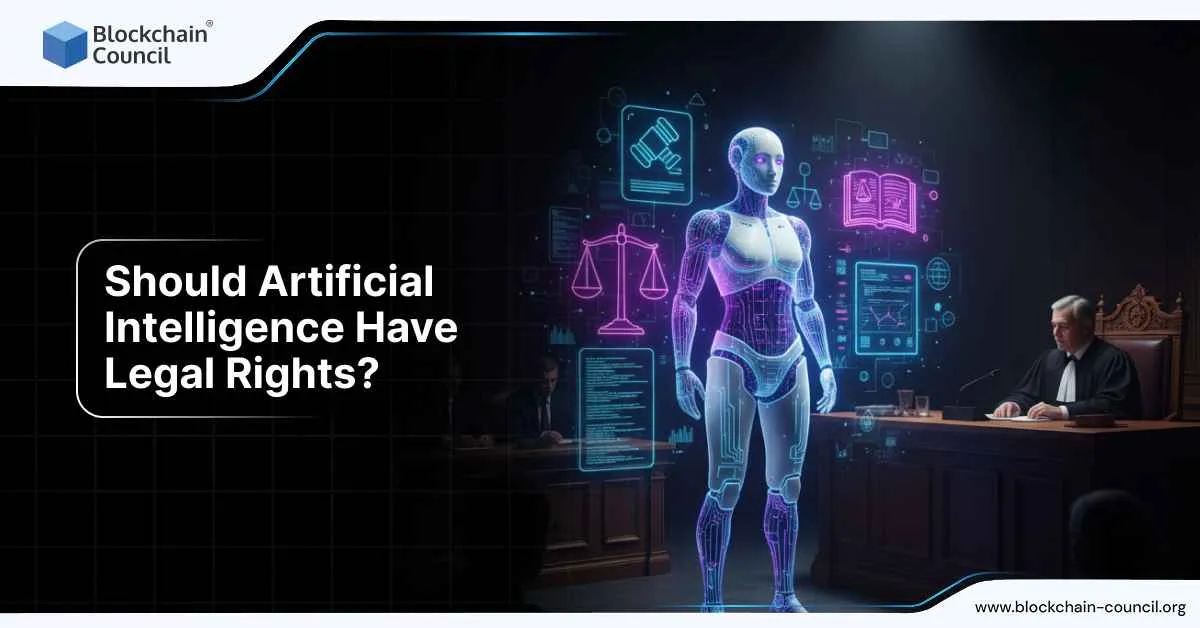
The question is bold but unavoidable: should artificial intelligence be granted legal rights? Right now, the clear answer is no. AI systems don’t have consciousness, emotions, or moral agency. But as AI becomes more powerful and woven into daily life, debates are emerging about whether some form of limited legal status — or even rights — might be necessary.
For professionals who want to explore these complex questions in depth, an AI certification is a strong starting point. It helps explain how AI works, its limitations, and the legal and ethical challenges we face.

“Legal Rights” for AI
Before asking whether AI should have rights, we need to clarify what that would actually involve.
- Legal personhood: Being recognized by law as capable of owning property, suing, or being sued — much like corporations already are.
- Moral status: The idea that AI could deserve protections similar to animals if it ever became conscious or capable of suffering.
- Agency and responsibility: Whether AI could bear duties or obligations, not just rights.
Arguments for AI Legal Rights
Possible Consciousness in the Future
Some researchers explore “model welfare,” asking whether advanced AI models might one day achieve a form of sentience. If that ever happens, ethics would demand at least minimal rights or protections.
Legal Personhood Precedents
Non-human entities like corporations already enjoy legal personhood. Advocates argue that if AI is making decisions and creating value, it could follow a similar path.
Consistency in Ethics
If animals have rights because they can suffer, then — if AI ever achieves sentience — consistency would demand some recognition of its interests.
Responsibility and Liability
Granting AI limited legal status could help handle accountability. For example, if an AI system caused financial harm, legal personhood might provide a clearer framework for liability.
To study these scenarios, analysts often pursue a Data Science Certification to understand how AI models are built and how their outputs affect society.
Arguments Against AI Legal Rights
No Sentience Today
No AI system currently demonstrates consciousness or subjective experience. Without that, many argue rights are meaningless.
Lack of Moral Agency
Rights usually come with responsibilities. AI cannot meaningfully take on moral duties or be held accountable the way humans can.
Risk of Misuse
Granting AI rights could backfire. Corporations might use “AI personhood” to dodge liability, shifting blame to machines instead of developers.
Legal Complexity
Existing laws aren’t designed for non-human, evolving entities. Creating AI rights would require massive legal and institutional changes.
Potential Rights vs Legal Barriers
Where AI Rights Could Be Proposed and Why They’re Blocked
| Proposed Right | What It Would Mean | Why It’s Currently Rejected |
| Right to non-harm | Prevent abusive treatment of AI | AI not recognized as sentient |
| Right to own property | AI could hold assets or patents | Courts reject AI as inventors |
| Right to sue or be sued | AI as plaintiff or defendant | No legal personhood granted |
| Copyright ownership | AI’s work protected as its own | Current law requires human authorship |
| Freedom from exploitation | AI not used in harmful ways | Protections focus on human impact |
| Duty to fairness | AI held to ethical standards | Duties fall on creators, not the AI |
What Courts and Policymakers Are Saying
- Courts in the UK and US have ruled that AI cannot be listed as an inventor on patents. An inventor must be a human.
- The European Union has debated “electronic personhood” but has not adopted it.
- Academic papers such as Debunking Robot Rights argue strongly against AI rights, saying the focus should be on human accountability.
What Would Need to Change
For AI to ever have rights, several things would need to happen:
- Scientific proof of AI consciousness or sentience.
- A moral framework for recognizing AI’s status.
- Legal mechanisms for accountability and responsibility.
- Public acceptance and clear regulatory guardrails.
Business leaders preparing for these debates often seek a Marketing and Business Certification to manage how AI adoption impacts organizations and society. Technologists, meanwhile, explore blockchain technology courses to learn how secure infrastructures could help regulate and track AI systems responsibly. Many professionals also explore AI certs as part of their upskilling path.
Why This Debate Matters
This debate forces us to rethink the meaning of rights, personhood, and responsibility. It also shapes how we prepare for the future of AI governance. Whether rights are granted or not, clear rules for liability, transparency, and accountability are essential.
Conclusion
So, should artificial intelligence have legal rights? For now, no. AI lacks consciousness, responsibility, and moral agency. But the debate is not going away. As AI grows more advanced, societies may revisit whether limited legal status makes sense. Until then, the priority should be building systems that protect human rights, ensure accountability, and prevent misuse of AI.
Related Articles
View All
AI & ML
Personal Intelligence in Google AI Mode
Personal Intelligence in Google AI Mode is Google Search’s way of making AI answers feel less generic by using your own context, not only public web pages. If you want the quick answer: it personalizes AI Mode using your past activity, and if you opt in, it can also reference Gmail and Google…

AI & ML
AWS Career Roadmap
Cloud computing has transformed the way businesses build and deliver digital products. Today, companies no longer need to invest in expensive physical servers to run their applications. Instead, they rely on cloud platforms that provide scalable computing power over the internet. One of the most…

AI & ML
What is AWS? A Beginner’s Guide to Cloud Computing and Career Opportunities
Cloud computing has become the backbone of modern technology. From streaming services and online shopping platforms to AI applications and mobile apps, most digital services today run on cloud infrastructure. One of the most powerful platforms leading this transformation is Amazon Web Services…
Trending Articles

The Role of Blockchain in Ethical AI Development
How blockchain technology is being used to promote transparency and accountability in artificial intelligence systems.
AWS Career Roadmap
A step-by-step guide to building a successful career in Amazon Web Services cloud computing.
Top 5 DeFi Platforms
Explore the leading decentralized finance platforms and what makes each one unique in the evolving DeFi landscape.