OpenAI Merchant Tools

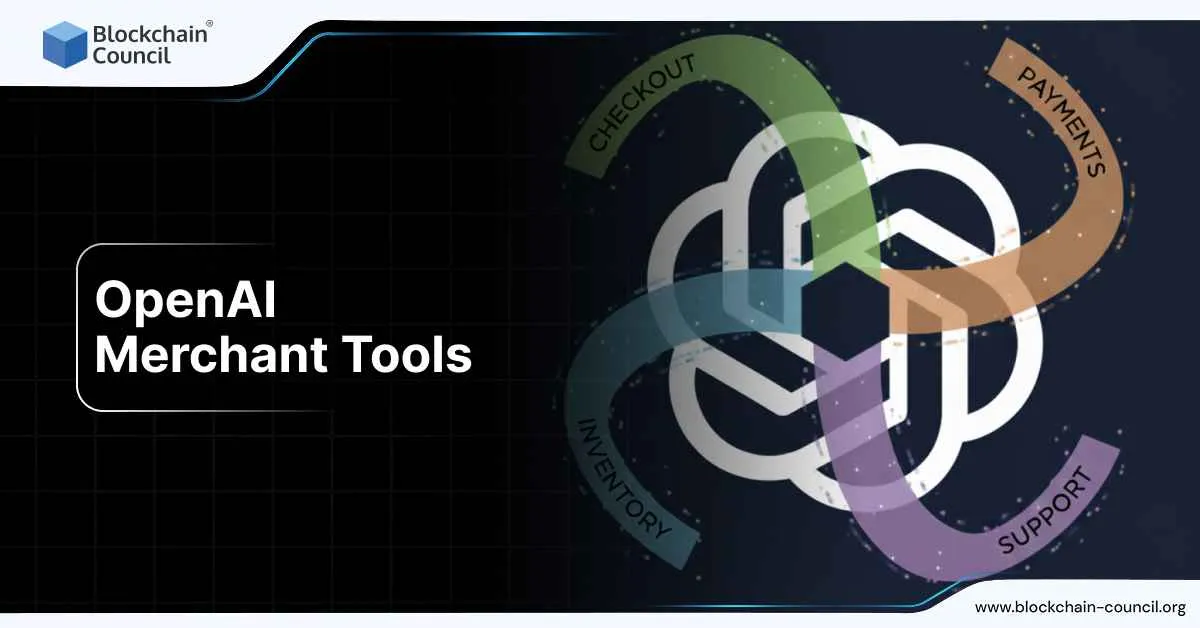
OpenAI merchant tools are OpenAI’s way of turning ChatGPT from a place where people research products into a place where they can actually buy them. Instead of stopping at recommendations, ChatGPT can now surface products, show buying options, and in some cases let users complete a purchase without ever leaving the chat.
If you are exploring this from an AI Certification perspective, this is one of the clearest real-world examples of agentic AI moving into commerce, not just content.

What are OpenAI merchant tools?
When people say “OpenAI merchant tools,” they are usually talking about three connected things.
First is shopping and product discovery inside ChatGPT, where products appear as part of conversational search results.
Second is Instant Checkout in ChatGPT, which allows a user to buy a product directly inside the chat interface.
Third is the Agentic Commerce Protocol, often called ACP, which is the technical standard that lets ChatGPT, merchants, and payment providers coordinate a purchase.
Together, these form OpenAI’s current merchant stack.
How can merchants get started with OpenAI?
There are two main entry points, depending on how technical your setup is.
How do merchants apply officially?
OpenAI runs a merchant onboarding flow at chatgpt.com/merchants. This is where merchants apply to have their products appear in ChatGPT shopping results and to enable Instant Checkout.
This path is designed for merchants who want official support and visibility inside ChatGPT’s shopping experience.
Can developers integrate directly?
Yes. OpenAI publishes dedicated commerce documentation that covers core concepts, production readiness, and technical specs for things like product feeds, agentic checkout, and delegated payments.
This route matters more to teams with custom storefronts or internal commerce systems, which is where a Tech Certification background often comes into play.
What is Instant Checkout in ChatGPT?
Instant Checkout lets users complete a purchase inside ChatGPT instead of clicking out to a merchant website.
According to OpenAI’s own announcements, Instant Checkout is currently available to U.S. users across Pro, Plus, and logged-in Free tiers, with expansion expected over time.
A critical detail many merchants miss at first is this. OpenAI is not the merchant of record. The merchant still handles payment processing, shipping, returns, refunds, and customer support. ChatGPT is the interface, not the seller.
At launch, Instant Checkout supports single-item purchases. Multi-item carts have been mentioned as a planned addition.
How does the Agentic Commerce Protocol actually work?
ACP is the plumbing that makes Instant Checkout possible.
In simple terms, it standardizes how an AI agent like ChatGPT talks to a merchant’s backend and payment system. OpenAI and Stripe describe it as a way to integrate commerce without forcing merchants to rebuild their existing systems.
In practice, the flow looks like this:
- ChatGPT sends an order request through ACP
- The merchant backend receives it and can accept or decline
- The merchant charges the payment method
- Taxes, fulfillment, returns, and support stay with the merchant
Stripe highlights that ACP is meant to work across platforms, processors, and business models, not just Stripe-native setups.
What is a product feed and why does it matter?
For products to show up correctly in ChatGPT shopping results, merchants provide structured product data through a Product Feed Specification.
Think of this as the catalog layer that helps ChatGPT understand what you sell, how much it costs, and whether it is available. Without this structure, conversational shopping breaks down fast.
This is similar in spirit to how search engines rely on structured data, but optimized for chat-based discovery.
How much do OpenAI merchant tools cost?
This is where confirmed facts and reported details need to be separated clearly.
What OpenAI officially confirms
OpenAI states that Instant Checkout is free for users and that merchants pay a small fee on completed purchases.
What is widely reported
Multiple industry reports and merchant discussions cite a 4 percent transaction fee for Shopify sales completed through ChatGPT checkout, with rollout beginning January 26, 2026. This figure has been attributed to statements confirmed by a Shopify spokesperson and repeated by outlets like PYMNTS and Marketplace Pulse.
OpenAI itself has not published a universal public rate card, so this number should be treated as reported and context-specific, not a blanket rule.
Does Instant Checkout affect product ranking?
This is a major trust question for merchants.
OpenAI explicitly says that enabling Instant Checkout does not guarantee better placement in ChatGPT shopping results. According to their statements, ranking considers factors like price, availability, quality signals, whether the merchant is a primary seller, and user experience considerations.
OpenAI claims this is about improving relevance, not selling placement.
Thing to remember
Across forums and industry chatter, the same concerns keep coming up.
Attribution is a big one. Merchants want to know how to connect a ChatGPT conversation to an eventual sale, especially if the journey is not linear.
Margins are another concern. A fixed transaction fee feels more like a marketplace commission than traditional advertising, and merchants debate whether the trade-off is worth it.
Channel dependence also worries people. Many merchants remember becoming overly reliant on search or marketplaces and are cautious about repeating that pattern with AI discovery.
These concerns are especially relevant for teams thinking from a Marketing and Business Certification angle, where channel mix and control matter.
No coding required for merchants
For many merchants, yes, mostly.
Marketplaces like Etsy and platforms like Shopify are expected to handle much of the technical integration behind the scenes. OpenAI and Stripe both position ACP as a low-change protocol, meaning merchants should not need to overhaul their backend.
For custom storefronts, some developer involvement is still required, either directly or through a gateway that already supports ACP.
So the honest answer is no heavy coding for platform merchants, some technical work for custom stacks.
Is OpenAI merchant tooling expanding beyond small items?
Yes, and that is an important signal.
Instacart has been reported as bringing full grocery purchasing into ChatGPT via Instant Checkout. This shows that OpenAI is aiming beyond simple product sales into real retail and local inventory workflows.
Final takeaway
OpenAI merchant tools combine ChatGPT shopping results, Instant Checkout, and the Agentic Commerce Protocol into a new commerce channel where discovery and purchase happen inside a conversation.
Merchants stay the merchant of record, handle fulfillment and support, and pay a transaction fee on completed purchases. Integration can be lightweight for platform sellers and more hands-on for custom stores.
The opportunity is clear. ChatGPT becomes a new discovery and conversion layer. The risk is also clear. Merchants need to think carefully about fees, attribution, and long-term channel dependence.