
The Infamous “Try My Game” Discord Scam


One of the most damaging scams on Discord doesn’t exploit code but human trust. Known as the “Try My Game” scam, it lures users into downloading what looks like a harmless beta test but is actually malware designed to steal wallets, accounts, and personal data.
Victims have lost thousands of dollars. In one case, an NFT artist lost $170,000 in crypto and NFTs within hours. For communities built on trust, this scam has become a major threat. A crypto certification can help you understand both the technology and the risks.

How the Scam Works
A scammer enters a Discord community, builds rapport, and then directly messages a target. The pitch is simple: “Try my new indie game” or “Please beta test this project.”
The link leads to a download hosted on Dropbox, Google Drive, or even Discord’s own CDN. Once installed, the file delivers a stealer or remote access Trojan that silently harvests information. This includes browser cookies, wallet data, and Discord login tokens.
The attacker then hijacks the victim’s account to spread the scam further, contacting friends and other community members with the same invitation.
Malware Variants Behind the Scam
Researchers have linked the scam to several malware families, including Electron-based stealers like Nova, Ageo, and Hexon, and RAT variants such as Bby Stealer. These tools are designed to:
- Extract saved credentials and cookies
- Capture Discord tokens to hijack accounts
- Access locally stored crypto wallets and browser extensions
- Collect payment information and personal details
The stolen data allows attackers to bypass passwords, drain wallets, and impersonate victims across platforms.
Case Study: A $170,000 Loss
NFT artist Princess Hypio reported losing $170,000 after clicking one of these malicious links. A scammer who had infiltrated her server posed as a trusted friend, convincing her to try a fake game. Within hours, her crypto and NFTs were gone.
This case underscores the danger: the scam works because it feels personal. Victims don’t think they’re trusting a stranger—they think they’re supporting a friend.
Expert Views
Security experts stress that the success of the scam is rooted in psychology, not advanced coding.
- Nick Percoco, CSO at Kraken: “It’s not about code exploits—it’s about exploiting people’s trust.”
- Gabi Urrutia, CISO at Halborn: “The attack is not technically sophisticated. It’s effective because people want to help others in their community.”
The “Try My Game” Scam Playbook
Step 1 – Infiltration
Scammer joins a Discord server and poses as a friendly member.
Step 2 – Direct Message
Target receives a personal invite to test a new game.
Step 3 – Download Link
File is hosted on Dropbox, Google Drive, or Discord’s CDN.
Step 4 – Malware Execution
Victim installs the fake game; malware activates in the background.
Step 5 – Data Theft
Credentials, cookies, wallets, and tokens are stolen.
Step 6 – Scam Expansion
Hijacked Discord accounts spread the scam to new victims.
Platform and Community Warnings
Warnings about this scam date back to 2021, when Itch.io forums flagged suspicious “try my game” invites. Discord’s own support pages explain how malware from these scams can harvest browser data, payment details, and IP addresses simply by clicking a link.
Despite the alerts, the scam persists because it manipulates trust in tight-knit communities.
How to Protect Yourself
- Avoid downloading files from unsolicited DMs, even if they appear to come from a friend.
- Confirm with contacts through another channel before clicking links.
- Use separate devices for testing unknown software and storing wallets.
- Enable multi-factor authentication to reduce account compromise risk.
- Keep antivirus software active to catch known stealer variants.
Why It Hits Crypto Hardest
For crypto users, the risk is severe. Once a wallet is compromised, funds can be transferred instantly and irreversibly. Browser-based wallets like MetaMask or Phantom are especially vulnerable.
That’s why crypto literacy is more than just learning about markets. A Data Science Certification helps you analyse attack patterns and wallet movements, while a Marketing and Business Certification can help you design awareness campaigns to protect entire communities.
Outlook
The “Try My Game” scam will remain a threat as long as people can be persuaded by social engineering. Its simplicity makes it easy to replicate, and its reliance on trust makes it highly effective. Stronger link detection from platforms could help, but until then, the best defence is awareness and caution.
Conclusion
The infamous “Try My Game” scam shows that the weakest link in security is often human trust. By preying on friendships and community ties, scammers have stolen millions in crypto and NFTs. Staying safe requires vigilance: never download unsolicited files, verify requests, and keep wallets protected.
Related Articles
View All
Bitcoin
How Many Bitcoins are there and How many are Left to Mine?
BTC Price USD: 67,737.58 BTC Price INR: ₹66,58,685.37 BTC Price CAD: 92,691.64 CAD BTC All-Time High: $126,080 BTC Market Cap: ~$2.05 trillion 24-Hour Trading Volume: ~$61.91 billion Circulating Supply: ~19.94 million BTC 24-Hour Change: -2.61% Bitcoin Market Cap: There is a limited supply of…

Bitcoin
How to set Bitcoin Mining Rig
BTC Mining Setting up a Bitcoin mining rig may sound complex, but with the right steps and components, anyone can get started. If you’re looking to mine Bitcoin from home or want to scale into a larger setup, this guide walks you through everything clearly. From choosing hardware to configuring…
Bitcoin
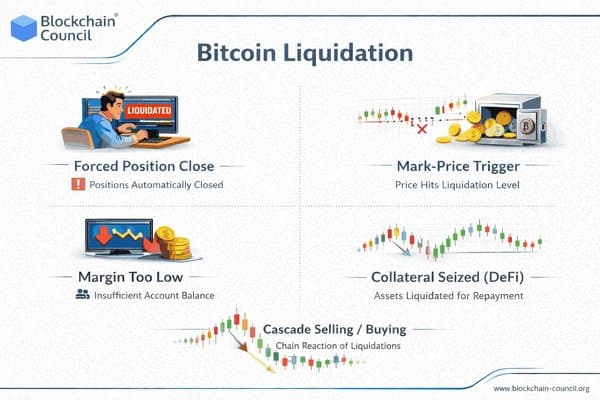
Bitcoin Liquidation
Bitcoin Liquidation Bitcoin liquidation is a forced close. You open a BTC position using margin (or you borrow against BTC-like collateral), price moves against you, and your safety buffer gets too small. At that point the platform takes control and closes the position, sells collateral, or both.…
Trending Articles

The Role of Blockchain in Ethical AI Development
How blockchain technology is being used to promote transparency and accountability in artificial intelligence systems.

AWS Career Roadmap
A step-by-step guide to building a successful career in Amazon Web Services cloud computing.
Top 5 DeFi Platforms
Explore the leading decentralized finance platforms and what makes each one unique in the evolving DeFi landscape.