
Cloud Gaming

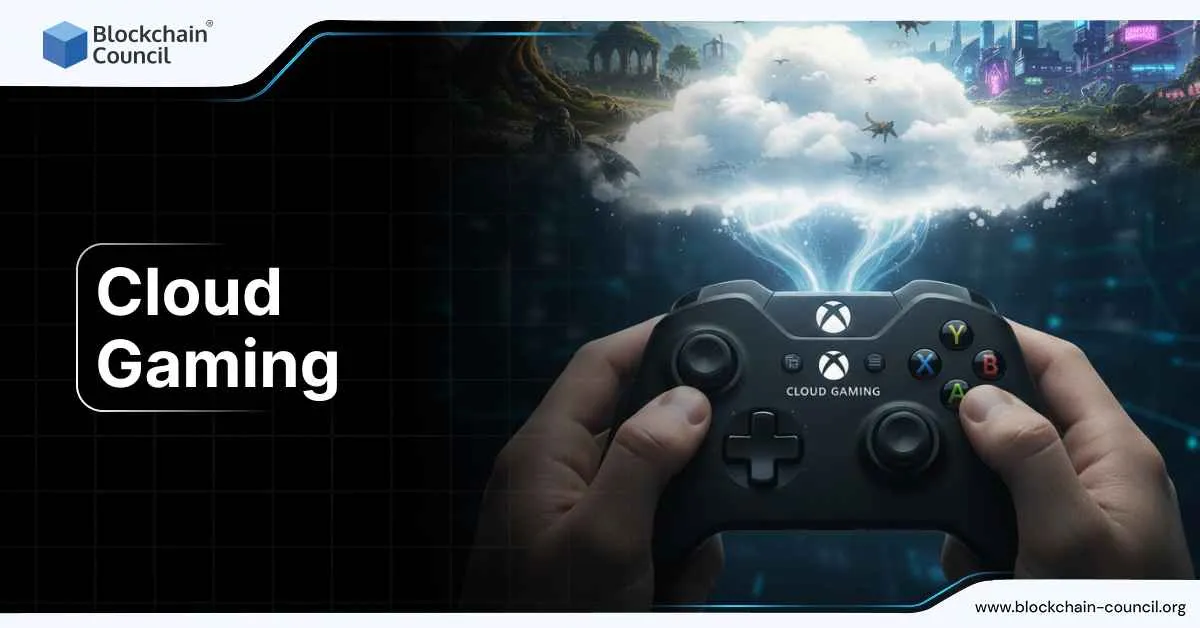
Cloud gaming means the game runs on a remote server while your device receives a live video stream and sends controller inputs back in real time. The promise is simple. You can play high end console or PC quality games on a phone, laptop, tablet, smart TV, or handheld device without owning powerful hardware.
As this model grows, it is also intersecting with advances in streaming technology, real time optimization, and automated decision systems. Many professionals follow these changes closely through structured learning such as AI Certification, since modern cloud gaming relies heavily on intelligent video encoding, traffic prediction, and latency optimization.

This article breaks down how cloud gaming works today, what really determines whether it feels smooth, and what to expect next.
What Cloud Gaming Is in Simple Terms
In traditional gaming, your console or PC does all the heavy work locally. In cloud gaming, that work happens in a data center. Your screen shows a live video feed of the game, while your button presses travel back to the server almost instantly.
If the round trip is fast and stable, the experience can feel close to local play. If it is slow or inconsistent, the illusion breaks very quickly.
That is why cloud gaming success depends less on raw graphics power and more on networking quality and infrastructure placement.
The Three Main Cloud Gaming Models
Not all cloud gaming services work the same way. Today, most fall into three categories.
Subscription Based Game Libraries
This model looks similar to a streaming service for games. You pay a monthly fee and stream from a catalog.
Xbox Cloud Gaming is tied to Game Pass subscriptions and lets users stream supported titles on devices they already own. PlayStation Plus Premium includes cloud streaming for select titles, including streaming directly to certain PlayStation devices without downloading.
This model works best for players who want convenience and variety without managing a personal game library.
Bring Your Own Games Cloud PCs
In this setup, the cloud service acts like a remote gaming PC.
NVIDIA GeForce NOW connects to stores like Steam and Epic Games. You stream games you already own, running on NVIDIA servers. NVIDIA publishes clear guidance on bandwidth and latency targets, which helps users understand whether their connection is suitable.
This model appeals to PC gamers who want flexibility without buying or upgrading hardware.
Platform or Publisher Specific Streaming
Some companies restrict cloud gaming to specific titles, devices, or ecosystems. This is usually done to control licensing, performance expectations, or operating costs.
While more limited, these services can be tightly optimized for their intended use cases.
What Has Changed Recently
Cloud gaming has existed for years, but the last twelve to eighteen months have brought visible improvements.
Xbox Cloud Gaming Is Improving Quality and Scale
Microsoft has expanded availability and improved visual quality for Xbox Cloud Gaming. Reporting indicates it has moved beyond beta status, with upgrades toward higher resolutions and bitrates for certain games and devices.
Microsoft has also highlighted growth and wider geographic coverage in late 2025, signaling long term commitment to the model.
PlayStation Portal Now Supports Direct Cloud Streaming
Sony added real cloud streaming to the PlayStation Portal for PlayStation Plus Premium members. This allows certain games to stream directly without relying on a local PS5.
However, reviews consistently point out that network quality still determines success. On unstable public Wi Fi, the experience can vary dramatically.
GeForce NOW Continues Regional Expansion
NVIDIA has been expanding GeForce NOW into new regions, including India. This matters because physical distance to data centers is one of the biggest factors affecting latency.
More regional servers usually mean better responsiveness for local players.
The Two Metrics That Matter Most
Cloud gaming performance comes down to two technical factors more than anything else.
Latency
Latency is the delay between pressing a button and seeing the result on screen.
NVIDIA’s guidance provides a useful benchmark. Under 80 milliseconds to a data center is considered playable, while under 40 milliseconds delivers a noticeably better experience. Above that, fast paced games like shooters, racing, or fighting titles start to feel disconnected.
No amount of graphics quality can compensate for high latency in competitive games.
Bandwidth and Stability
Bandwidth determines how much video data can be delivered, but stability is just as important.
For example, 15 Mbps may be enough for 720p at 60 frames per second, and around 25 Mbps for 1080p at 60 frames per second. But if your connection suffers from jitter or packet loss, you will still see blur, stutter, or sudden resolution drops.
A steady connection often matters more than peak speed.
Practical Tips for a Better Cloud Gaming Experience
Small changes can make a big difference.
Using Ethernet instead of Wi Fi is the single biggest upgrade, especially for TVs and consoles. If Wi Fi is unavoidable, using a 5 GHz or Wi Fi 6 connection and staying close to the router helps.
Choosing a lower resolution like 720p can feel far smoother than pushing 1080p on an unstable network. Game choice also matters. Turn based games, strategy titles, RPGs, and many open world games tolerate latency far better than esports shooters.
Testing your setup at the same time of day you usually play is important. Evening congestion can turn an otherwise good connection into a frustrating one.
Why Companies Keep Betting on Cloud Gaming
Despite challenges, major companies continue investing in cloud gaming for clear reasons.
It expands access to players who do not own expensive hardware. It removes long downloads and storage limitations. It enables instant demos and trials. It also allows publishers to run games in controlled environments, which can reduce cheating and simplify updates.
Microsoft often frames cloud gaming as a way to play on the devices people already have. That distribution logic is central to the strategy.
Building and maintaining these systems requires deep expertise in networking, infrastructure, and real time systems. Professionals working close to these platforms often build that understanding through Tech certification programs that focus on how large scale digital systems operate.
Market Direction and Growth Expectations
Most market research firms point to continued growth driven by faster internet, wider device support, and better compression technology. Forecasts vary, so any single number should be treated as directional rather than precise.
What is consistent is the trend. Cloud gaming is moving from novelty toward a complementary way to play, especially for casual and mid core audiences.
What to Watch in 2026
Several developments will shape the next phase.
Higher resolutions and bitrates are likely to expand across subscription services to better match cloud PC offerings. Reliability for handheld and mobile play will remain a focus, since inconsistent networks still undermine the play anywhere promise.
Regional data center expansion will matter more than almost any other factor. Latency remains the hard limit that technology cannot fully overcome.
From a business perspective, cloud gaming also changes how games are marketed and distributed. Instant access, trials, and device agnostic play alter customer acquisition strategies. Professionals working at this intersection often strengthen their perspective through Marketing and Business Certification programs that connect technology shifts to audience growth and engagement.
Final Perspective
Cloud gaming is no longer just about proving it works. It is about making it reliable enough for everyday use.
When latency is low and connections are stable, the experience can feel surprisingly close to local play. When they are not, even the best technology falls short.
The industry’s direction is clear. More regions, smarter streaming, and better infrastructure will continue to close the gap. Cloud gaming may not replace consoles or PCs entirely, but it is steadily earning its place as a serious way to play.
Related Articles
View All
Info
AI Death Calculator
AI Calculator The concept of an “Artificial Intelligence Death Calculator” might sound like something out of a science fiction novel, but it’s an intriguing subject that explores the intersection of AI, health, and data analytics. This article delves into the potential and…

Info
Blooket Hacks with Updated Codes
What is Blooket? Blooket is an educational platform designed to make learning fun and interactive. It combines quiz-style games with engaging gameplay elements to create a dynamic student learning experience. Teachers can host Blooket games where students answer questions to earn points and…
Info
FintechZoom.com
FintechZoom FintechZoom is a notable platform for those interested in the stock market. It offers real-time data, in-depth analysis, and educational resources. Here are some of the key areas you must check out on the stock market FintechZoom section. The Nasdaq Composite is one of the most closely…
Trending Articles
The Role of Blockchain in Ethical AI Development
How blockchain technology is being used to promote transparency and accountability in artificial intelligence systems.

AWS Career Roadmap
A step-by-step guide to building a successful career in Amazon Web Services cloud computing.
Top 5 DeFi Platforms
Explore the leading decentralized finance platforms and what makes each one unique in the evolving DeFi landscape.