How Do AI Voice Clones Work, and Are They Safe?

The ability to copy someone’s voice with just a few seconds of audio has gone from science fiction to everyday reality. AI voice cloning can now capture not just what someone sounds like, but how they speak—their rhythm, accent, even emotional tone. This technology is reshaping entertainment, accessibility, and customer service, but it’s also opening doors to scams, impersonation, and misuse. To navigate these changes thoughtfully, many professionals begin with an AI certification to understand both the innovation and the risks.
How Voice Cloning Actually Works
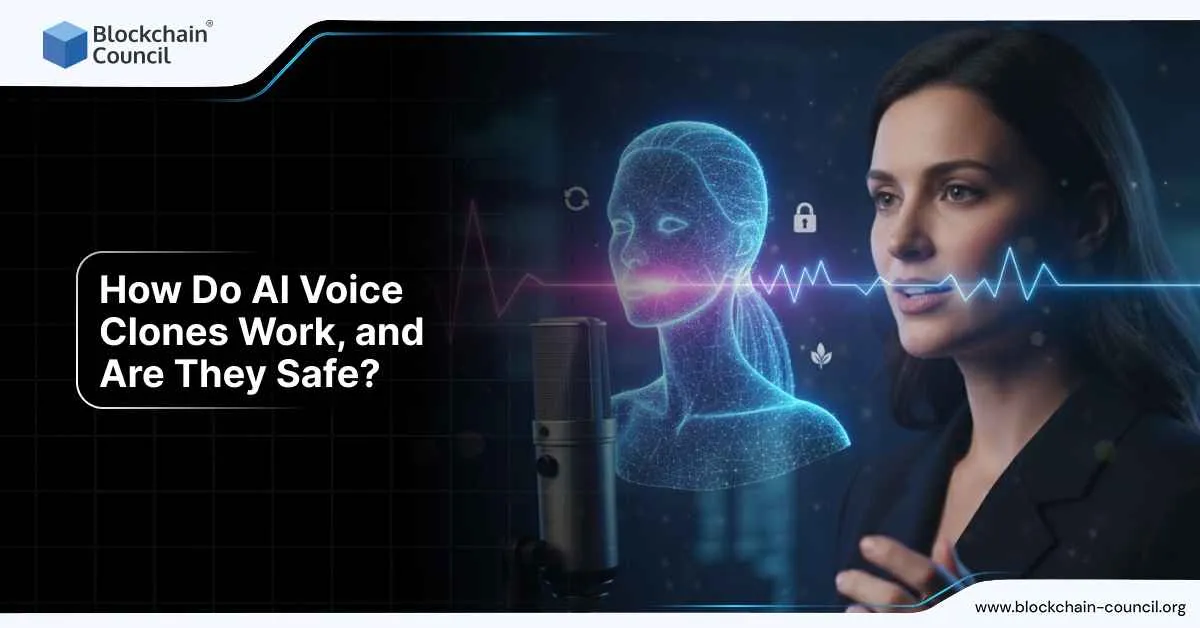
Modern systems break a voice down into data. A neural network takes short samples, often less than 30 seconds, and analyzes acoustic features like pitch, cadence, and timbre. From there, it creates a statistical map of how the voice functions. When paired with text-to-speech engines, the AI can generate entirely new sentences in the cloned voice.

The latest advances push beyond simple mimicry. Newer models are capturing subtle markers, such as emotional inflections or micro-pauses, making the synthetic voice nearly indistinguishable from the real thing. This is why recordings of public figures or creators on social media are especially vulnerable—they often provide more than enough audio to build a convincing clone.
The Risks That Come With Realism
The same traits that make voice cloning exciting also make it dangerous. One of the most pressing risks is identity theft: scammers can use cloned voices to trick family members, employees, or customers into handing over money or information. Privacy concerns are equally strong, since many clones are built from recordings taken without consent.
Deepfake audio can also spread misinformation. Fake statements attributed to politicians or public figures are harder to dispute when the audio “sounds” authentic. Beyond that, there’s reputational harm for creators and financial harm for businesses if their voices are used in misleading ways.
For artists and professionals interested in how voice data connects with content protection, blockchain technology courses provide insight into how digital provenance and verification systems can work alongside AI.
Efforts to Make Voice Cloning Safer
Developers are introducing defenses to limit abuse. Some tools now add imperceptible distortions to recordings, making it harder for AI to copy a voice cleanly. Other solutions rely on watermarking synthetic voices so their origin can be verified. Regulations are also beginning to emerge: Tennessee’s ELVIS Act, for example, is one of the first laws specifically protecting people against unauthorized use of their voice.
At the organizational level, security experts recommend not using voice alone for authentication. Multi-factor verification—like combining voice with a code or device check—makes impersonation attempts less effective. To analyze and strengthen these approaches from a data perspective, many learners pursue a Data Science Certification that covers both technical and compliance-oriented practices.
Why Businesses Need to Pay Attention
Companies are adopting voice cloning for customer service, marketing, and accessibility. But every use comes with responsibility. Ensuring voices are cloned with consent, disclosing when AI is speaking, and protecting sensitive audio samples are all part of safe deployment. Leaders balancing these opportunities with risks often turn to a Marketing and Business Certification to better align AI adoption with trust and strategy.
AI Voice Cloning at a Glance
| Aspect | What’s Happening | Why It Matters |
| How it works | Neural networks map pitch, timbre, cadence from seconds of audio | Enables natural text-to-speech in any cloned voice |
| Realism | Latest models capture emotion and subtle vocal traits | Makes fakes harder to spot |
| Risks | Scams, impersonation, misinformation, privacy breaches | Undermines trust in audio as evidence |
| Protections | Watermarking, adversarial noise, metadata standards | Helps identify and secure audio |
| Laws | New acts like Tennessee’s ELVIS Act | Early legal frameworks for voice rights |
| Best practices | Multi-factor authentication, disclosure of cloned voices | Reduces misuse and builds transparency |
Conclusion
AI voice cloning is one of the clearest examples of how generative technology can both empower and endanger. The technology itself is remarkably advanced, but safeguards are still catching up. Detection tools remain imperfect, and legal protections are only just emerging. For now, the safest path is awareness—knowing how the tools work, understanding their risks, and adopting both technical and ethical protections. Those who invest in the right knowledge today, from AI literacy to data and business certifications, will be best equipped to use this technology responsibly in the years ahead.