
What is AWS? A Beginner’s Guide to Cloud Computing and Career Opportunities

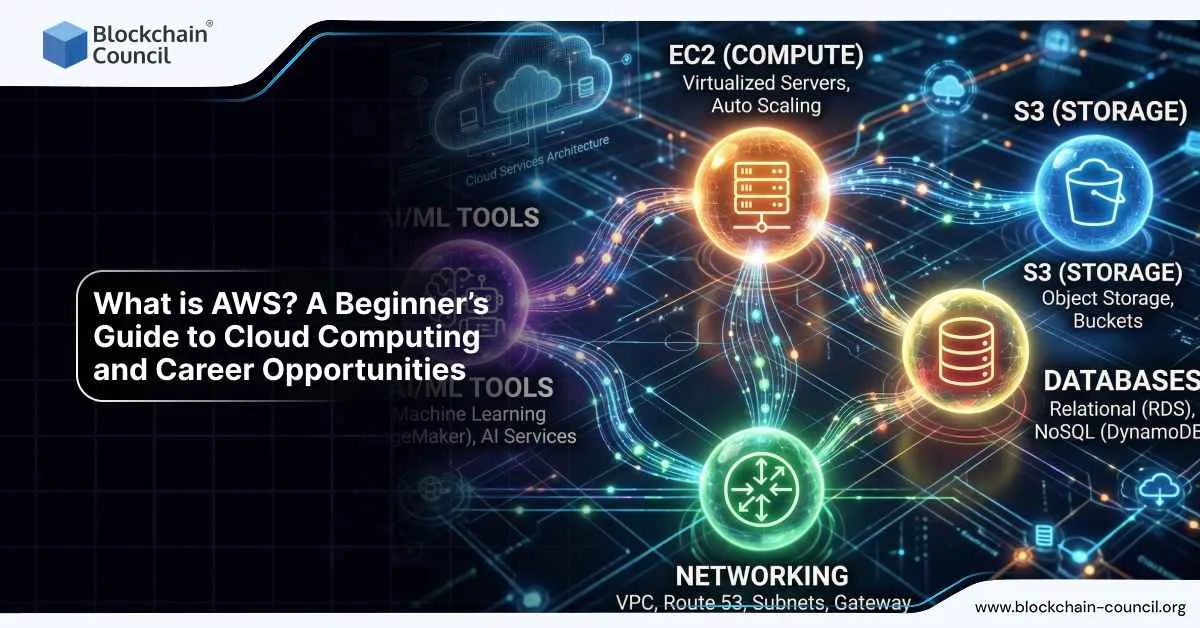
Cloud computing has become the backbone of modern technology. From streaming services and online shopping platforms to AI applications and mobile apps, most digital services today run on cloud infrastructure. One of the most powerful platforms leading this transformation is Amazon Web Services (AWS).
For students, developers, and professionals looking to enter the technology industry, understanding AWS and cloud computing can open doors to some of the highest-paying and fastest-growing careers in tech.
This article explains what AWS is, who its competitors are, and how you can start your cloud computing journey.
What is AWS?
AWS (Amazon Web Services) is a cloud computing platform developed by Amazon that provides businesses and developers with on-demand computing resources over the internet.
Instead of buying expensive servers and maintaining physical data centers, organizations can use AWS to rent computing power, storage, and networking services whenever they need them.
AWS allows companies to:
- Store large amounts of data
- Host websites and applications
- Run artificial intelligence and machine learning models
- Manage databases
- Build scalable digital products
Today, AWS offers over 200 cloud services used by startups, enterprises, and government organizations around the world.
Many well-known platforms rely on AWS infrastructure to operate smoothly and scale globally.
Why AWS Became So Popular
AWS dominates the cloud computing market because of several key advantages.
1. Scalability
AWS allows businesses to scale resources instantly. A company can increase or decrease computing power depending on demand.
2. Global Infrastructure
AWS operates data centers in multiple regions across the world, ensuring faster performance and reliability.
3. Security
The platform provides strong security frameworks, encryption systems, and compliance tools that protect sensitive data.
4. Cost Efficiency
Instead of investing millions in hardware, companies pay only for the resources they actually use.
5. Wide Range of Services
AWS offers services for computing, storage, analytics, machine learning, IoT, cybersecurity, and much more.
Because of these advantages, AWS has become a critical part of the digital infrastructure used by thousands of organizations globally.
Major AWS Services You Should Know
If you are starting your cloud journey, some core AWS services are important to understand.
Amazon EC2
A service that provides virtual servers in the cloud where applications can run.
Amazon S3
A cloud storage service used to store files, images, backups, and large datasets.
AWS Lambda
A serverless computing service that allows developers to run code without managing servers.
Amazon RDS
A managed database service that simplifies database setup and management.
Amazon CloudFront
A content delivery network that speeds up website and application performance.
These services form the foundation of many modern cloud-based systems.
Who Are AWS Competitors?
Although AWS is the market leader in cloud computing, several powerful competitors are also shaping the cloud ecosystem.
Microsoft Azure
Microsoft Azure is one of AWS’s biggest competitors and is widely used by enterprises that rely on Microsoft products such as Windows Server, Office 365, and Active Directory.
Azure provides services similar to AWS including cloud computing, AI tools, and analytics platforms.
Google Cloud Platform (GCP)
Google Cloud Platform is another major cloud provider known for its strengths in:
- data analytics
- artificial intelligence
- machine learning infrastructure
Many companies use Google Cloud because of its advanced data processing capabilities and integration with Google technologies.
IBM Cloud
IBM Cloud focuses heavily on enterprise solutions, hybrid cloud infrastructure, and AI services powered by IBM Watson.
Large corporations and financial institutions often use IBM Cloud for complex enterprise systems.
Oracle Cloud
Oracle Cloud specializes in database services and enterprise applications. Organizations that already use Oracle databases often choose Oracle Cloud for better compatibility.
AWS vs Competitors
While AWS remains the largest cloud provider, each platform has its strengths.
AWS is known for:
- the largest service ecosystem
- mature cloud infrastructure
- strong developer tools
Azure is strong in enterprise environments, while Google Cloud leads in AI and data analytics.
For professionals entering cloud computing, learning AWS is often recommended because it has the largest market share and job demand.
Why AWS Skills Are in High Demand
The demand for cloud professionals has increased rapidly because almost every modern organization is migrating to the cloud.
Industries that rely heavily on cloud infrastructure include:
- fintech
- e-commerce
- healthcare
- media and streaming
- artificial intelligence
- SaaS startups
Companies need experts who can build, manage, and secure cloud environments.
As a result, roles such as Cloud Engineer, AWS Architect, DevOps Engineer, and Cloud Security Specialist are among the fastest-growing technology careers.
How to Start Your AWS Journey
Starting a career in AWS does not require years of experience, but it does require a structured learning approach.
Step 1: Learn Cloud Computing Fundamentals
Before diving into AWS services, it is important to understand basic cloud concepts such as:
- virtualization
- networking basics
- storage systems
- cloud architecture
These concepts help you understand how cloud infrastructure works.
Step 2: Create an AWS Free Tier Account
AWS provides a Free Tier account that allows beginners to experiment with cloud services without paying.
You can practice:
- launching virtual machines
- hosting websites
- managing cloud storage
- deploying simple applications
Hands-on practice is one of the best ways to learn cloud computing.
Step 3: Learn Core AWS Services
Start by focusing on foundational AWS services like:
- EC2
- S3
- IAM (Identity and Access Management)
- VPC (Virtual Private Cloud)
- Lambda
Understanding these services will give you a strong foundation in AWS architecture.
Step 4: Work on Real Projects
Practical projects help reinforce learning.
Some beginner projects include:
- hosting a static website on AWS
- deploying a simple web application
- creating automated backups using S3
- building serverless applications with Lambda
Projects demonstrate real skills that employers value.
Step 5: Earn AWS Certifications
AWS certifications validate your cloud skills and improve your chances of landing a job.
Popular certifications include:
- AWS Certified Cloud Practitioner
- AWS Solutions Architect Associate
- AWS Developer Associate
- AWS DevOps Engineer
These certifications help professionals stand out in the competitive job market.
What Is This Career Profile Called?
Professionals who work with AWS and cloud infrastructure are generally referred to as Cloud Computing Professionals.
Some common job titles in this field include:
- Cloud Engineer
- AWS Solutions Architect
- DevOps Engineer
- Cloud Security Engineer
- Cloud Infrastructure Engineer
These roles involve designing, deploying, and managing cloud-based systems for organizations.
Future of AWS and Cloud Careers
Cloud computing will continue growing as businesses rely more on digital platforms, artificial intelligence, and big data systems.
Experts predict that cloud technologies will power:
- AI infrastructure
- blockchain platforms
- smart cities
- autonomous systems
- global digital services
Because of this, professionals with AWS expertise will remain highly valuable in the technology industry.
Final Thoughts
AWS has become one of the most important technologies driving the digital economy. By providing scalable cloud infrastructure, it enables businesses to build powerful applications without managing physical hardware.
For individuals interested in technology careers, learning AWS and cloud computing can be a powerful step toward entering the modern tech workforce.
By understanding cloud fundamentals, practicing with AWS tools, and earning certifications, anyone can start building a successful career in cloud computing.