
Open-Source Video Generation Model Wan 2.2

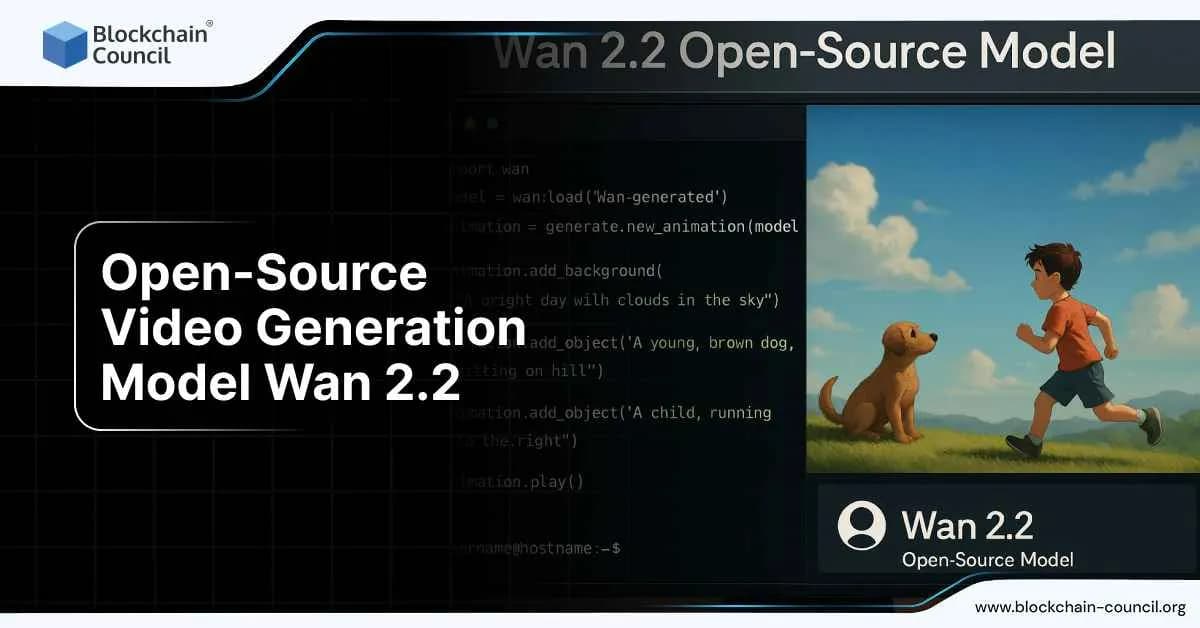
Wan 2.2 is the newest open-source video generation model from Alibaba’s Wan AI team, designed to produce high-quality 720p videos using text or images as input. It is fast, free, and accessible to creators and researchers with consumer-grade GPUs. This release positions Wan 2.2 as a serious alternative to closed commercial tools like Sora or Gen-3, making AI-powered video generation widely available.
This article breaks down what Wan 2.2 offers, how it compares to other models, and why it matters to the growing AI video ecosystem.

Key Features of Wan 2.2
Wan 2.2 brings together advanced features while remaining open-source and lightweight enough to run on devices like the RTX 4090. It works with both text prompts and still images, producing short animated clips with smooth motion and realistic frames.
The biggest leap is in video quality. Compared to Wan 2.1, this version uses over 65 percent more image data and 83 percent more video data for training. That results in better scene consistency, natural movement, and higher output resolution at 720p and 24 frames per second.
Why Wan 2.2 Stands Out
Unlike most video generation tools that are either locked behind expensive APIs or heavy infrastructure, Wan 2.2 is fully open-source under the Apache 2.0 license. This gives developers and creators a no-cost way to build, customize, or test AI video workflows.
It also runs efficiently. Generation times are around 30 seconds for 480p videos and slightly longer for 720p, depending on GPU. The smaller model variants still deliver quality while using fewer resources.
The model supports three modes: text-to-video, image-to-video, and a hybrid approach. All are compatible with local setups or platforms like Replicate and Hugging Face.
Wan 2.2 Features at a Glance
| Feature | Details |
| Resolution Output | 720p at 24 fps |
| Input Modes | Text-to-video, Image-to-video, Hybrid |
| Training Data Increase | +65% images, +83% video clips |
| Model Size | Ranges from 5B to 14B parameters |
| Inference Time (480p) | ~30 seconds |
| GPU Compatibility | Works on consumer GPUs like RTX 4090 |
| License | Apache 2.0 (fully open-source) |
This table offers a complete view of what Wan 2.2 delivers in terms of performance and accessibility.
Performance and Community Response
Developers and researchers who tested Wan 2.2 describe its motion realism as a significant step forward. On forums, it is praised for producing cleaner video output, especially in human motion and background handling. Some note that its text-to-video mode still has room to improve, but image-based results are already beating most other open-source competitors.
Public testing shows that even the lighter versions of Wan 2.2 outperform several closed tools on visual clarity and consistency. Thanks to its fast inference time, it’s already being integrated into real-world content workflows.
How It Compares to Other Tools
Wan 2.2 narrows the gap between open-source and commercial AI video generation. While tools like Runway Gen-3 or Sora may offer longer clips or more advanced motion features, they require subscriptions, limited beta access, or strong cloud computing infrastructure. Wan 2.2, in contrast, runs locally and doesn’t lock users behind paywalls.
Wan 2.2 vs Other AI Video Tools
| Tool/Model | Resolution | Speed | Open Source | Usability Level |
| Wan 2.2 | 720p at 24 fps | Fast (30 sec) | Yes | Local and platform-ready |
| Runway Gen-3 | Up to 1080p | Moderate | No | Platform-only access |
| Sora (OpenAI) | Up to 60 sec clips | Unreleased | No | Closed, invite-only |
| Pika Labs | Up to 4 sec clips | Fast | No | Web interface, limited edit |
This table summarizes the tradeoffs and highlights why Wan 2.2 is an important development for the open AI community.
Use Cases and Applications
Wan 2.2 can be used in many creative and practical contexts:
- Marketing: Quick promotional videos from simple prompts
- Education: Visual explanations built from still graphics
- Social media: Fast generation of loops or story-based clips
- Design and prototyping: Animate concept visuals during early product phases
- Research and development: Model testing and academic projects with reproducible setups
Because of its low compute cost and flexible license, Wan 2.2 is also a great entry point for beginners in generative video research.
Learning the Skills Behind Tools Like Wan 2.2
As open-source video generation advances, so do the skills needed to work with these tools. If you want to build a career around AI media tools, now is a good time to invest in foundational learning.
Start with the AI Certification to understand the logic and architecture behind video models. Then continue with the Agentic AI certification. The Data Science Certification will help with model evaluation, statistics, and experimentation. The Marketing and Business Certification teaches you how to apply these tools in real-world product and content strategies.
Final Takeaway
Wan 2.2 is a breakthrough for open-source video generation. It combines quality, speed, and accessibility in a way that puts powerful creative tools into the hands of everyday users. Its performance shows that open models can now compete with top-tier commercial offerings—without the cost or restrictions.
For developers, artists, marketers, and researchers, Wan 2.2 opens the door to faster production and more creative control. And with its flexible license, this model will likely become a foundation for new innovation in AI video.
Related Articles
View All
AI & ML
AI Skills for Coders in 2026: Prompt Engineering, Code Generation, and AI Debugging Workflows
AI skills for coders in 2026 include prompt engineering, AI code generation, and AI debugging workflows to ship faster with quality, testing, and observability.

AI & ML
What Is OpenClaw? Complete Guide to the Open-Source AI Agent Platform (2026)
OpenClaw is an open-source AI agent platform that lets you automate tasks, run workflows, and control systems locally with powerful integrations.

AI & ML
Perplexity Model Council
As large language models become more powerful, they also become more complex. Different models can give different answers to the same question, even when they are all considered advanced. This creates a challenge for researchers, analysts, and professionals who need reliable information rather than…
Trending Articles

The Role of Blockchain in Ethical AI Development
How blockchain technology is being used to promote transparency and accountability in artificial intelligence systems.

AWS Career Roadmap
A step-by-step guide to building a successful career in Amazon Web Services cloud computing.

Top 5 DeFi Platforms
Explore the leading decentralized finance platforms and what makes each one unique in the evolving DeFi landscape.