
NASA Tests AI for Satellite Autonomy
 Michael Willson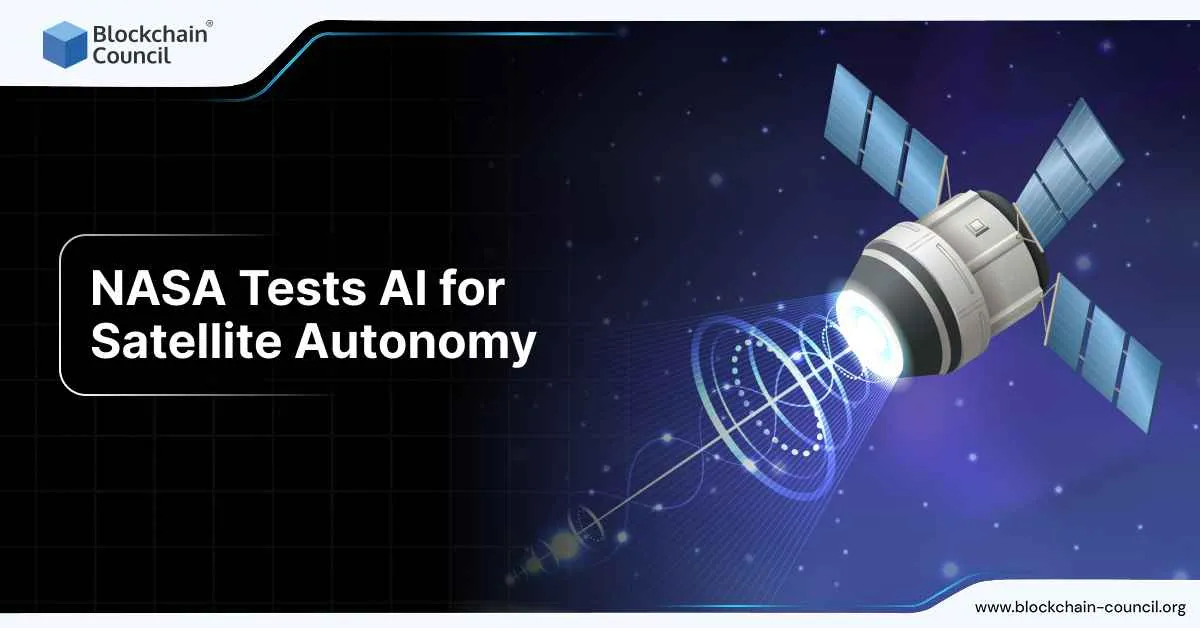
NASA has tested a new AI system that allows satellites to make decisions on their own—without waiting for commands from Earth. The system, called Dynamic Targeting, was successfully demonstrated on a CubeSat in orbit. It allows the satellite to decide whether to take a picture based on weather conditions ahead. This is the first time NASA has shown a spacecraft using artificial intelligence to make real-time decisions in space.
In this article, you’ll learn what Dynamic Targeting is, how it works, what NASA achieved, and why this is a major step for future space missions.

What Is Dynamic Targeting?
Dynamic Targeting is an onboard AI system designed to help satellites act more intelligently. Instead of following a fixed schedule, the satellite first looks ahead to check if the sky is clear. If clouds are detected, it skips taking a photo. If the view is clear, it captures the image.
This selective approach reduces wasted data, saves energy, and ensures better quality images are returned to Earth.
How NASA Tested the AI System
NASA partnered with Open Cosmos and Ubotica to carry out the test. The AI system was installed on CogniSAT-6, a small CubeSat launched in March 2024.
Step-by-Step Process
- The satellite tilts to look ahead at its flight path.
- It captures a preview image about 300 miles forward.
- Onboard AI analyzes the image and checks for cloud cover.
- If clear, the satellite repositions to take a ground photo.
- If cloudy, it skips the shot and waits for a better view.
All of this happens in less than 90 seconds—while the satellite is flying at over 17,000 miles per hour.
Key Features of NASA’s Dynamic Targeting System
| Feature | Function | Benefit |
| Look-ahead imaging | Preview flight path before capture | Avoids wasting storage on cloudy images |
| AI decision-making | Real-time image analysis onboard | No need for ground instructions |
| Fast processing | Entire process takes under 90 seconds | Responds quickly to changing conditions |
| Adaptive targeting | Skips or captures based on visibility | Focuses on useful data only |
| CubeSat compatible | Works with small, low-cost spacecraft | Enables smarter small missions |
Why This Test Matters
Traditional satellites take pictures on a schedule, even when views are blocked by clouds. NASA’s new AI lets satellites choose their targets more intelligently. This means:
- Less time spent downloading useless data
- Better use of limited onboard storage
- Higher efficiency in mission planning
This is especially useful for Earth observation tasks like wildfire detection or storm tracking, where time and clarity matter.
Real Results from Orbit
NASA confirmed that the test worked. The satellite used Dynamic Targeting to:
- Preview and analyze cloud cover
- Skip cloudy regions and save battery
- Capture clearer images than before
This system allows a satellite to function more like a human operator—making decisions in real time based on current conditions. That’s a major shift in how satellites are used.
Future Plans for AI in Space
NASA is already looking ahead. The next version of Dynamic Targeting could be used to spot:
- Wildfires
- Dust storms
- Volcanic eruptions
- Severe weather events
The agency is also studying Federated Autonomous Measurement, a system where multiple satellites share tasks. One satellite might detect an event, then signal others to focus on that target.
Traditional vs AI-Based Satellite Operation
| Operation Type | Traditional Satellite | AI-Based (Dynamic Targeting) |
| Imaging Schedule | Fixed and preset | Adaptive, based on real-time analysis |
| Data Collected | Large volumes, often includes noise | Smaller volume, mostly useful content |
| Decision Making | Ground-controlled | Onboard and autonomous |
| Energy Use | Constant operations | Optimized based on actual need |
| Event Detection | Requires ground analysis | Immediate reaction possible |
Impact on Satellite Design and Research
AI systems like this will change how satellites are built and used. Instead of focusing only on data collection, future designs will prioritize:
- Smart processing onboard
- Smaller and cheaper missions
- Faster response to natural events
This benefits scientists, governments, and private companies. More usable data in less time leads to better research and faster decision-making.
Who Can Benefit from This Technology
- Researchers will receive clearer, more focused data
- Engineers can design more efficient and affordable satellites
- Mission planners will gain tools for real-time targeting
- AI professionals will find opportunities to apply edge AI in aerospace
For anyone entering this field, it’s a great time to build skills in AI systems. Programs like the AI Certification offer insights into how AI can work in mission-critical environments. The Data Science Certification helps those working with space-based data streams. The Marketing and Business Certification is useful for those planning commercial uses of AI in satellite tech.
Final Takeaway
NASA’s Dynamic Targeting system proves that AI can make real-time decisions in space. This is a major step toward building smarter, faster, and more responsive satellites. By giving satellites the ability to think before they shoot, NASA is paving the way for more efficient missions and better data.
Related Articles
View All
AI & ML
AWS Career Roadmap
Cloud computing has transformed the way businesses build and deliver digital products. Today, companies no longer need to invest in expensive physical servers to run their applications. Instead, they rely on cloud platforms that provide scalable computing power over the internet. One of the most…
AI & ML
What is AWS? A Beginner’s Guide to Cloud Computing and Career Opportunities
Cloud computing has become the backbone of modern technology. From streaming services and online shopping platforms to AI applications and mobile apps, most digital services today run on cloud infrastructure. One of the most powerful platforms leading this transformation is Amazon Web Services…

AI & ML
How to Start an AWS Career Using AI: A Modern Beginner’s Guide
Cloud computing has become one of the most important technologies powering the digital world. From streaming platforms and mobile apps to artificial intelligence systems and large-scale business applications, most modern services rely on cloud infrastructure. Among the many cloud platforms…
Trending Articles

The Role of Blockchain in Ethical AI Development
How blockchain technology is being used to promote transparency and accountability in artificial intelligence systems.
AWS Career Roadmap
A step-by-step guide to building a successful career in Amazon Web Services cloud computing.

Top 5 DeFi Platforms
Explore the leading decentralized finance platforms and what makes each one unique in the evolving DeFi landscape.