
Nano Banana Pro

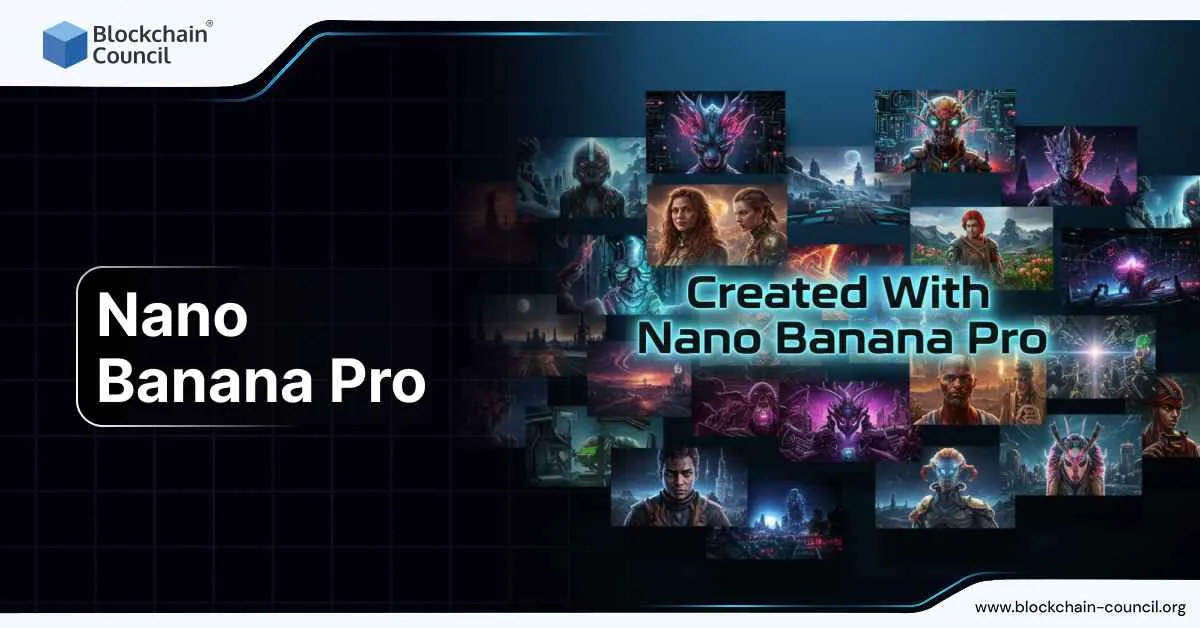
Nano Banana Pro is Google’s advanced Gemini 3 Pro Image model designed for creators, developers, educators, and marketing teams who want high quality visuals with accurate text, strong consistency, and precise controls. It launched globally on 20 November 2025 and immediately stood out because it produces polished, professional images that look ready for campaigns, product shots, diagrams, slides, and storyboard sequences. Anyone building modern AI creative workflows often begins with an AI Certification because it helps them understand how Nano Banana Pro performs multi step reasoning, layout planning, and visual structuring.
Origin and Release Timeline of Nano Banana Pro
Nano Banana Pro is part of the Gemini 3 model family. It follows the earlier Nano Banana, which was based on the Gemini 2.5 Flash Image stack.
The Official Launch on 20 November 2025
The model first appeared inside the Gemini mobile and web apps as the Thinking image mode. Google then rolled out full support across AI Studio, Vertex AI, Workspace apps, and third party tools.
Pre Launch Internal Development and Testing
Before the public announcement, the model went through enterprise preview testing with selected partners. This included marketers, design studios, and product teams who helped validate character consistency, text clarity, and multilingual rendering.
Post Launch Expansion Across Google Products
Within weeks of the release, Nano Banana Pro became standard inside Slides, Vids, NotebookLM, and enterprise visual generation pipelines.
Why Nano Banana Pro Matters Today
Nano Banana Pro is built for creators who need dependable accuracy. Posters, infographics, architectural mockups, diagrams, product visuals, and multi person scenes require a model that understands alignment, typography, and identity. Nano Banana Pro became popular because it performs structured planning before generating the image. This gives it a level of clarity and precision older models did not have.
Core Strengths That Make Nano Banana Pro Unique
Nano Banana Pro has a collection of features that bring stability and clarity across many visual formats.
High Resolution Outputs Without Quality Loss
The model generates clean 2K images with strong color accuracy and sharp details. Many tools also provide a clear upscale path to near 4K quality using internal super resolution.
Advanced Text Rendering Across Languages
Posters, labels, signage, mobile UI mockups, and diagrams appear sharp because the model was trained extensively on layout heavy datasets. It handles long paragraphs, multilingual scripts, and complex alignment with high accuracy.
Multi Reference and Multi Person Consistency
Nano Banana Pro accepts up to fourteen reference images and preserves identity for up to five individuals. This makes it ideal for storyboards, pitch decks, brand shoots, and long running content sequences.
Professional Lighting and Camera Precision
Users can specify soft cinematic lighting, clear studio light, rim light, and ambient styles. The model follows instructions for camera angle, zoom, aperture, depth of field, and perspective with a high degree of accuracy.
Accurate Layout Planning With Deliberate Visual Reasoning
Nano Banana Pro performs multiple internal planning passes before rendering the final image. This step helps it place objects, position text, balance spacing, and follow diagram structures.
Technical Breakdown of Nano Banana Pro
Nano Banana Pro builds on the Gemini 3 architecture and includes several technical upgrades.
Architecture and Visual Encoder
The model uses an upgraded ViT based encoder designed for higher spatial accuracy. It captures texture, geometry, and text regions with better precision. The backbone includes a set of expert layers that manage text, shape, human identity, color gradients, and layout structures.
Internal Latent Planning Steps
Nano Banana Pro performs multi stage planning.
The hidden stages include:
- A structural layout stage
- A spatial alignment stage
- A text fitting stage
- A lighting simulation stage
These planning passes help the model avoid distortion and keep text readable.
Token Efficiency and Text Rendering Logic
Text is handled with mixed vector and raster logic. Characters are placed based on internal token spacing rules that use dynamic kerning correction.
Resolution and Aspect Ratio Support
The default canvas is 2048 by 2048.
Supported common ratios include:
- 1:1
- 9:16
- 16:9
- 3:2
- 4:5
The model adapts objects and layout to the selected canvas without warping.
Reference Image and Identity Embedding System
Nano Banana Pro uses a dedicated identity embedding module that extracts facial structure, lighting traits, and clothing attributes. This keeps individuals consistent across different settings and angles.
Editing and Local Region Control
Users can modify only a part of an image without masks. Examples include changing a background, adjusting an outfit, adding reflections, or shifting the mood of a portrait.
Safety and Provenance Systems
Nano Banana Pro includes SynthID invisible watermarking along with metadata markers that follow content credential standards. This helps platforms track the origin of each image.
Training Approach and Data Characteristics
Nano Banana Pro was trained with a large multilingual corpus and a mixed dataset of real world scenes, diagrams, UI layouts, signage, and structured infographics. Significant portions of training included synthetic data to reinforce precision tasks like labeling and geometric alignment.
Visual Categories Emphasized During Training
- Commercial product scenes
- Multilingual signage
- Flowcharts and diagrams
- Professional portraits
- Event posters
- Technical illustrations
- Lifestyle photography
This training focus is why the model performs well in business and education environments.
Performance and Stability Benchmarks
Nano Banana Pro delivers consistent results across different content types.
Image Generation Speed
Typical completions take between two and four seconds depending on complexity and platform.
Text Accuracy Scores
Testing shows high accuracy across English and strong performance across multilingual scripts.
Identity Preservation Benchmarks
Faces remain stable even when lighting or camera perspectives change. This stability is one of the key reasons for its popularity among designers and social content creators.
How Nano Banana Pro Works Across Google Surfaces
Gemini App
Nano Banana Pro appears inside the Create Images section under the Thinking model. The priority is clarity rather than speed.
AI Studio
Developers can use the Gemini API to build visual generators, design assistants, and diagram creation tools. Many follow structured learning paths like a Tech Certification because the model features align with modern AI development concepts.
Vertex AI
Enterprise pipelines use Nano Banana Pro for batch generation. The model supports large scale workloads for product teams, educational platforms, and marketing departments.
Workspace Apps
Slides uses the model for clean backgrounds and content ready illustrations. Vids generates storyboards. NotebookLM helps researchers build visual summaries.
Practical Uses of Nano Banana Pro
Marketing and Branding
Brands create posters, carousel sets, event creatives, and campaign visuals with accurate text and strong consistency. This is a strong advantage for teams working with a Marketing and Business Certification.
Ecommerce and Product Visualization
Nano Banana Pro handles product materials, lighting, and packaging with clarity. It can generate lifestyle scenes, mockups, and catalog graphics.
Education and Technical Illustration
Teachers and creators produce charts, timelines, labeled diagrams, and visual explainers. Text alignment remains stable even on complex layouts.
Storyboarding and Multi Scene Content Generation
Writers and filmmakers create sequences that keep characters consistent across different panels and environments.
Nano Banana Pro vs the Original Nano Banana
Sharper Text and Better Multilingual Support
The new encoder handles text cleanly across multiple scripts. Signage and UI elements appear much sharper than before.
Improved Identity Consistency Across References
The upgraded embedding system preserves facial traits more reliably. Older models had difficulty maintaining stability across angles.
Better Lighting and Camera Interpretation
Nano Banana Pro understands direction, mood, and cinematic tone with greater accuracy.
Known Quirks and Observed Behavior Patterns
Every model has some predictable behavior patterns.
Extreme Aspect Ratios May Reduce Clarity
Very wide or very tall canvases sometimes produce soft edges.
Dense Text Blocks May Lose Sharpness
Paragraphs longer than four lines may need image upscaling.
Fine Jewelry and Hand Poses Can Occasionally Blur
Details like rings or complex hand positions can require a second pass.
Advanced Prompting Tips for Best Results
Use Clear Lighting and Camera Instructions
Examples: soft studio light, wide shot, shallow depth.
Specify Text Placement and Tone Clearly
Examples: centered heading, bold title, lower corner label.
Use Multi Reference Uploads for Character Consistency
Three to six references produce the most stable results.
Describe Material and Texture for Product Shots
Examples: glossy finish, satin texture, reflective metal.
Pricing, Limits, and Platform Availability
Gemini App
Free users have daily caps. Paid plans increase the number of available generations.
AI Studio
Pricing is based on image generation usage within the Gemini 3 Pro Image tier.
Vertex AI
Enterprise plans include higher throughput and bulk generation options.
Conclusion: Why Nano Banana Pro Stands Out
Nano Banana Pro sets a new standard for professional grade image creation. Its release on 20 November 2025 introduced a more structured, accurate, and reliable way to generate diagrams, posters, product visuals, storyboards, and educational graphics. With improved text clarity, stable identity retention, and strong control over lighting and layout, it has become a core tool for teams working in marketing, content creation, education, product design, and AI development.