
Meta Compute

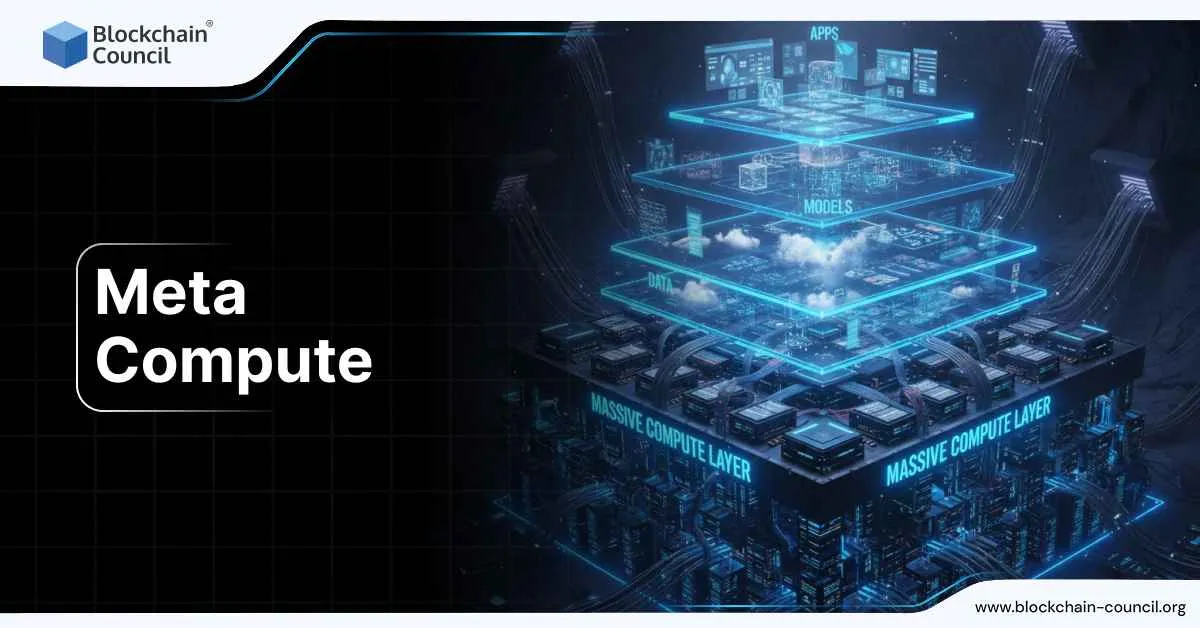
Meta has formally launched Meta Compute, a top-level initiative that centralizes how the company builds and scales its AI computing capacity. Announced between January 12 and 14, 2026, the move signals Meta’s shift from treating compute as backend support to making it a core strategic advantage — one that spans data centers, silicon, software, and energy.
This shift reinforces a broader industry truth: AI isn’t bottlenecked by algorithms anymore, but by compute, power, and supply chains. That’s also why professionals across AI infrastructure and systems design are turning to structured learning paths like an AI Certification to understand how large-scale AI systems are actually built.
What Meta Compute Is
Meta Platforms describes Meta Compute as an internal command center for everything related to AI hardware, infrastructure, and energy. It brings under one roof the functions that used to be spread across divisions — from silicon design and data centers to supply chain and long-term capacity planning.
In plain terms, Meta Compute is where AI capability, hardware, and energy strategy now meet.
The Headline Goal: Gigawatt-Scale AI Infrastructure
Meta’s CEO Mark Zuckerberg has said the company plans to build “tens of gigawatts” of compute this decade and eventually “hundreds of gigawatts or more.”
At that scale, Meta’s AI infrastructure would consume as much power as some small countries, which is why the energy strategy is being treated as part of the compute plan itself.
Meta Compute’s mission is to ensure the company’s AI ambitions — from model training to real-time inference across billions of users — don’t hit a physical or energy ceiling.
Who Is Leading Meta Compute
Reports consistently highlight a small, high-level leadership group:
- Santosh Janardhan – Co-leading Meta Compute, responsible for technical infrastructure and operations.
- Daniel Gross – Co-leading with a focus on capacity planning, supply partnerships, and long-term scaling.
- Dina Powell McCormick – Engaged in government partnerships and external stakeholder relations, signaling that regulatory and energy diplomacy are part of the playbook.
Their roles show that this isn’t just a technical unit — it’s an industrial and policy-level initiative.
Why Meta Created a Dedicated Unit
Meta’s AI investment story has evolved from models to megawatts. The reasoning is simple:
- AI progress now depends on access to massive compute and reliable power.
- Data centers are expensive, constrained, and slow to build.
- Supply chains for GPUs, networking, and energy are becoming geopolitical choke points.
By making compute its own division, Meta is betting that controlling the stack — from chip to kilowatt — will be what separates long-term winners in AI.
This direction mirrors what engineers often study under advanced Tech Certification programs: the intersection of hardware, energy, and distributed systems as the new foundation of AI scale.
The Power and Energy Dimension
One of the most important parts of the Meta Compute plan is energy procurement.
- Reuters reports Meta is pursuing long-term power agreements tied to Vistra Corp nuclear plants and small modular reactors.
- The goal is to secure multi-decade, low-carbon power contracts to keep up with AI demand.
- Meta executives have described energy as the “new input cost” for large AI systems, on par with compute hardware itself.
This aligns with the industry trend where hyperscalers — including Microsoft, Google, and Amazon — are negotiating directly with energy providers to guarantee future capacity.
Spending and Buildout Scale
Multiple reports link Meta Compute to the company’s aggressive capital spending trajectory:
- $72 billion in planned AI infrastructure capex for 2025.
- Major new data center projects, including a large Louisiana site.
- Broader restructuring of infrastructure partnerships and long-term supplier commitments.
Meta’s move effectively turns compute from a cost center into an investment vehicle, signaling that AI infrastructure is the company’s next competitive moat.
What Meta Compute Likely Owns Day to Day
While Meta hasn’t released an org chart, coverage and internal descriptions suggest Meta Compute’s core responsibilities include:
- Capacity planning – Forecasting how much compute is needed, where, and when.
- Data center execution – Designing, building, and operating next-generation AI sites.
- Hardware and silicon strategy – Managing chip design, accelerator procurement, and vendor relationships.
- Energy partnerships – Negotiating long-term power deals and renewable or nuclear sources.
In short, it is the operating arm for scaling Meta’s AI future.
Why It Matters
Meta Compute isn’t just another reorganization — it’s Meta’s way of preparing for a decade where infrastructure equals intelligence. Whoever controls the most efficient, scalable, and sustainable compute wins the AI race.
For professionals tracking this evolution, understanding how compute economics, supply chains, and model deployment connect is no longer optional. It’s a business competency that blends technical fluency and strategic planning — the same mix taught in programs like Marketing and Business Certification for leaders aligning AI infrastructure with corporate growth.
Meta Compute marks a turning point in how tech giants think about AI: not as a feature, but as an industrial-scale system that requires power, physics, and policy to align.