

Meet India’s First Robotic Elephant, Irinjadapilly Raman
 Blockchain Council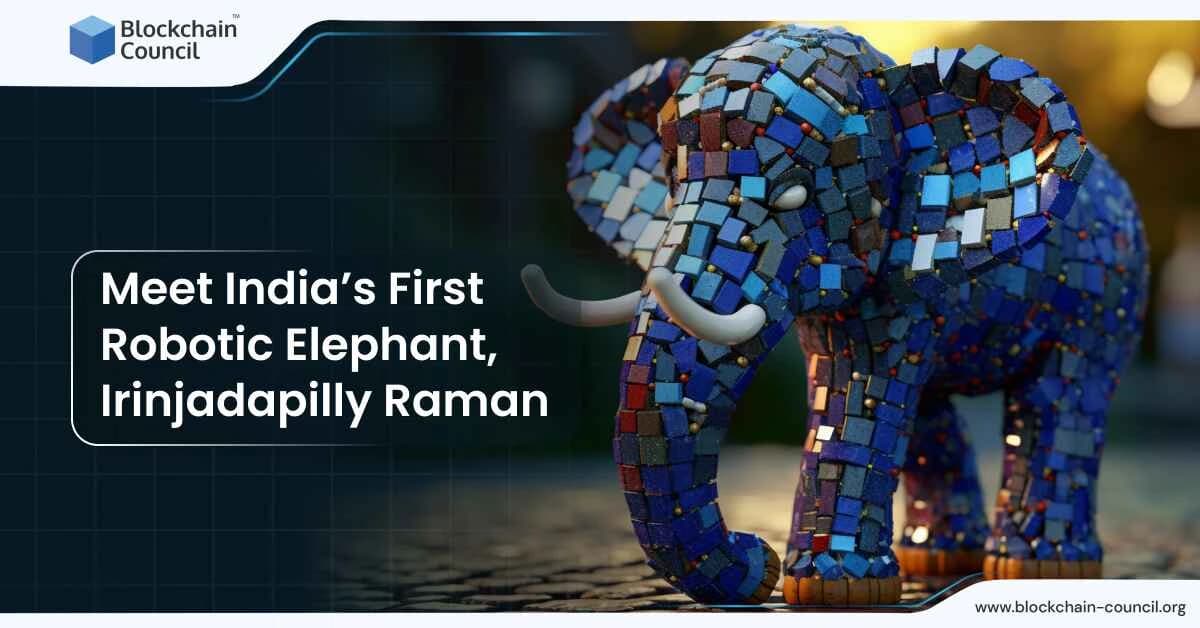
India is known for its vibrant traditions and festivals, where elephants often hold a special place, especially in temple events. However, the use of real elephants has raised concerns about their well-being and how they are treated. People worry about the mistreatment these majestic animals face. To address these issues, the Irinjadapilly Sree Krishna Temple in Thrissur has introduced something unique: a robotic elephant named Irinjadapilly Raman. This innovation blends tradition with compassion.
This initiative was supported by People for Ethical Treatment of Animals (PETA) India and actress Parvathy Thiruvothu. They donated the mechanical elephant to the temple to help reduce the use of live elephants in religious ceremonies.

Features of the Robotic Elephant
Raman is not just a simple figure. It is crafted to look and move like a real elephant. Standing at 11 feet and weighing around 800 kilograms, this mechanical elephant uses advanced technology to mimic natural movements. It is powered by five electric motors that enable it to move its trunk, flap its ears, and even nod gently. The robotic elephant was officially introduced during a traditional ceremony called Nadayiruthal, a ritual where elephants are usually presented to the temple’s deity.
Beyond its realistic movements, this robotic elephant can also carry up to five people, adding a practical element to its ceremonial use. It is decorated in the traditional style seen in temple festivals, with all the usual ornaments found on live elephants. With these features, Raman fits naturally into the cultural environment, providing a respectful alternative without involving real animals.
The Need for Change
For years, Kerala’s temple festivals have showcased elephants adorned with intricate decorations, attracting large audiences. These elephants are often seen in processions, rituals, and other events. However, there has been growing criticism of how captive elephants are treated. Many of these animals are kept in chains, undergo severe training, and live in poor conditions that cause significant stress and health problems. Captive elephants sometimes display aggressive behavior, leading to tragic incidents. According to data from PETA, captive elephants have caused over 520 deaths in Kerala in the past 15 years, often due to stress-induced aggression. This alarming statistic has fueled the push for alternatives like robotic elephants.
The introduction of robotic elephants such as Irinjadapilly Raman addresses these concerns by offering a cruelty-free option that retains the cultural essence of temple rituals. This approach reflects a rising awareness of more humane practices in religious traditions.
The Cultural Shift
Kerala’s temple festivals, known for their grand displays of elephants, are deeply rooted in the state’s culture. However, the use of robotic elephants like Raman signals a move towards kinder practices. The temple authorities of Irinjadappilly Sri Krishna Temple hope that other temples will be inspired to follow suit, gradually moving away from using live animals in their rituals. This shift also responds to growing public awareness and advocacy by animal rights groups, who emphasize the need to reconsider the use of animals in public and religious contexts.
Challenges and Reactions
While the move to use robotic elephants has been praised by animal rights organizations, it has also faced mixed reactions from traditionalists who are used to seeing live elephants at temple events. Some people question whether a mechanical elephant can evoke the same emotional and spiritual connection as a living one. Despite these concerns, the temple authorities are optimistic that the symbolic representation of an elephant, without the associated cruelty, will gain acceptance over time.
The transition to robotic elephants also brings attention to broader issues of animal rights in India, encouraging a more considerate approach to long standing traditions.
Conclusion
Irinjadapilly Raman is a symbol of kindness, creativity, and respect for both cultural traditions and animal rights. By substituting live elephants with a realistic robotic version, the temple is setting an example of how technology can preserve traditions without harming animals. This innovative step by Irinjadapilly Sree Krishna Temple serves as an inspiration for other religious institutions to reevaluate their practices and consider more compassionate alternatives.
Related Articles
View All
AI & ML
OpenAI Dots vs Grok Bot vs Muse
Compare OpenAI Dots, Grok Bot, and Meta Muse to understand how these always-on AI agents differ in persistent work, computer use, connected apps, automation, and personal or business workflows.

AI & ML
What Is OpenAI Dots?
Learn what OpenAI Dots are, how these always-on AI agents work, and how they use GPT-6 Astra, cloud computers, connected apps, and persistent context to handle ongoing tasks.

AI & ML
OpenAI Launches GPT 6.1-Sol
OpenAI launches GPT-6.1 Sol, a new reasoning model offering near-Astra performance at lower cost for complex coding, computer use, agentic workflows, and professional tasks.
Trending Articles
What is AWS? A Beginner's Guide to Cloud Computing
Everything you need to know about Amazon Web Services, cloud computing fundamentals, and career opportunities.
How to Install Claude Code
Learn how to install Claude Code on macOS, Linux, and Windows using the native installer, plus verification, authentication, and troubleshooting tips.
How to Create Claude Skills?
Claude Skills are one of the most important features Anthropic has introduced for users who want automation that is structured, consistent and reusable. Instead of giving Claude long instructions ever