
Korea’s AI Education, Here’s What the World Can Learn
 Michael Willson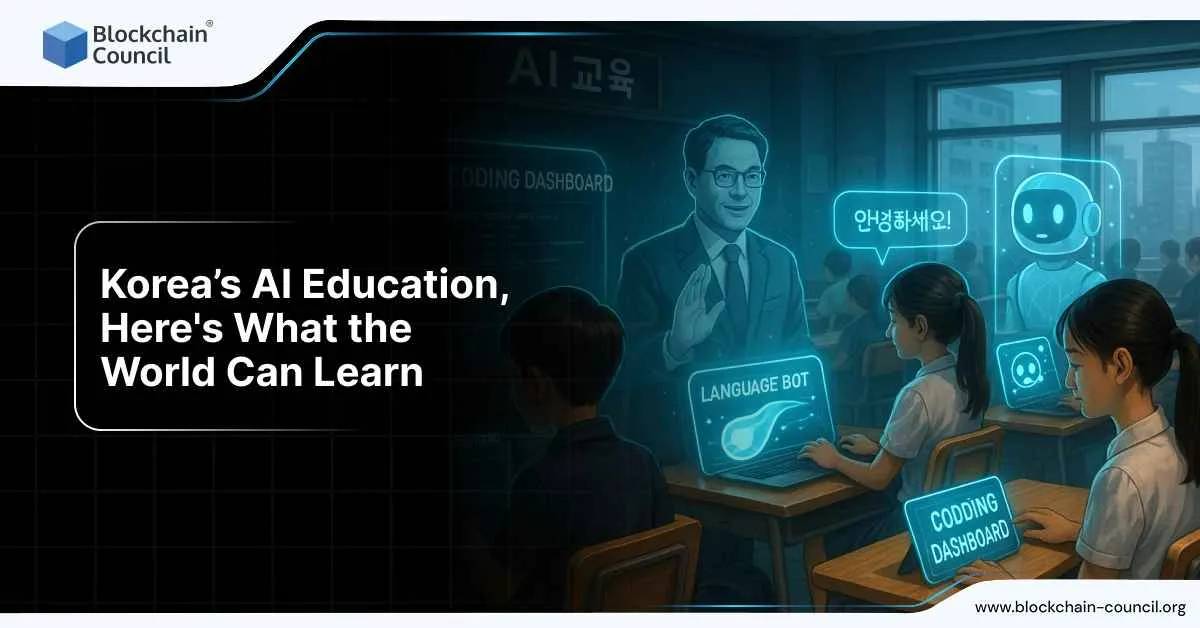
South Korea is taking a bold step by bringing AI directly into the classroom. Starting in March 2025, schools will begin using AI-powered digital textbooks for subjects like math, English, and computer science. These smart tools adapt to student needs and support teachers, not replace them. This article explains what South Korea is doing, how it works, and what other countries can learn from it.
What Is South Korea’s AI Education Plan?
AI Textbooks in Core Subjects
The Ministry of Education in South Korea is introducing AI-enhanced digital textbooks in public schools. These textbooks offer real-time feedback, personalized learning paths, and smart support for students who struggle or excel. Subjects include math, English, computer science, and Korean for special education.
By 2028, AI support will also cover social studies and science. The rollout is being done in stages, beginning with pilot schools.
Teacher-Led, AI-Supported
The goal is not to replace teachers. In fact, the strategy empowers educators. AI handles repetitive tasks like checking answers or adjusting lesson levels. Teachers then use that saved time to guide discussions, lead projects, and give emotional support.
Instead of being passive users of AI, Korean teachers are trained to manage and shape how AI is used in class.
Why This Approach Matters
South Korea’s plan isn’t just about technology. It’s about balancing human skills with smart automation. With strong teacher training, advanced infrastructure, and clear ethics, this program sets a global example.
Many other countries are still debating how to use AI in education. South Korea is doing it—with care, planning, and feedback.
AI in Korean Classrooms
Pilot Program Rollout
Pilot programs began in 2023 and helped schools collect feedback on how AI textbooks perform. These programs focused on both student performance and teacher satisfaction. This allowed the education ministry to adjust the tools and policies before a wider rollout.
Infrastructure and Budget
The government is spending $740 million from 2024 to 2026. This covers:
- Devices for every student
- Strong school Wi-Fi
- Digital tutors and smartboard
- Teacher training programs
By ensuring all schools have access, the country reduces the digital divide between urban and rural areas.
Benefits of AI Textbooks in Schools
| Advantage | Description | Who Benefits |
| Personalized Learning | Adapts pace and difficulty to each student | Students with varied needs |
| Real-Time Feedback | Gives instant corrections and tips | All students |
| Teacher Efficiency | Frees time by automating grading and monitoring | Teachers |
| Reduced Inequality | Ensures equal access to digital education tools | Rural and low-income areas |
Challenges and Public Concerns
Parent Backlash and Legal Changes
More than 50,000 parents signed a petition against AI textbooks. Concerns included increased screen time, privacy, and dependence on machines. In response, the government revised the Education Act.
Now, AI textbooks are optional. Schools can decide how and when to use them. The policy also requires teachers to be involved in AI planning.
Teacher Responsibility
AI cannot understand student emotions or handle sensitive classroom issues. Teachers still play a major role in ensuring that AI decisions are correct and ethical. That’s why professional development is key.
Skills Taught Beyond Academics
South Korea is considering adding AI as a standalone subject in the national curriculum. This means students will learn:
- What AI is
- How algorithms work
- Ethical challenges in AI
This builds early awareness and prepares students for AI-driven careers.
Global Takeaways from Korea’s AI Classroom Strategy
| Lesson for Other Nations | Example from Korea | Reason It Works |
| Start with pilot programs | Korea tested tools in select schools | Helps fix issues before scaling |
| Train teachers, not just students | Teacher training is part of the plan | Ensures tech is used wisely |
| Focus on equal access | Every student gets a device | Avoids leaving anyone behind |
| Involve the public | Policy changed after parent feedback | Builds trust and acceptance |
Upskill for the Future of AI in Education
If you’re in education, leadership, or tech development, now is the time to build the skills needed to shape AI use in learning environments.
- The AI Certification teaches how AI works in real-world applications.
- The Agentic AI Certification helps professionals manage AI agents in education and enterprise tools.
- The Data Science Certification focuses on interpreting learning data and building adaptive systems.
- The Marketing and Business Certification offers training in leading AI-driven transformation across industries, including education.
Final Takeaway
South Korea is showing the world how to use AI in education without losing the human touch. By focusing on teacher support, personalized learning, and ethical design, the country is building a smarter, safer classroom model.
Other nations can learn from Korea’s mix of planning, feedback, and flexibility. The future of education doesn’t depend on choosing between people and machines. It depends on helping them work together.