

Google DeepMind Announces SignGemma

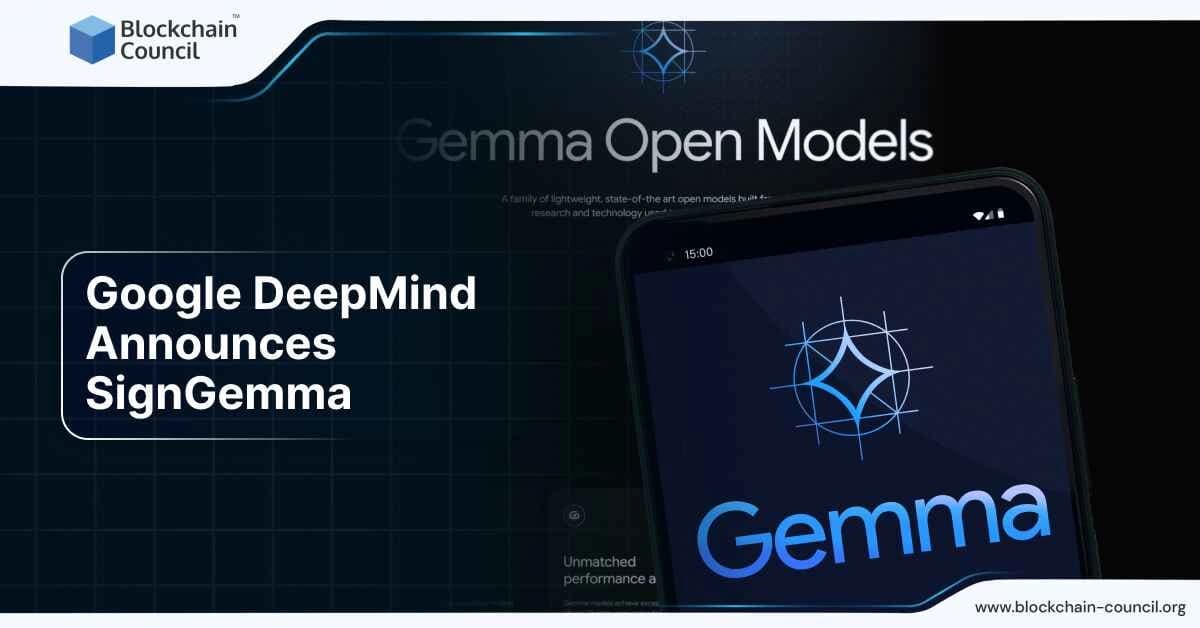
Google DeepMind has introduced SignGemma — a new AI model that translates sign language into text. Built to support American Sign Language (ASL) first, SignGemma uses multimodal capabilities like video and audio analysis to convert hand gestures into spoken or written language. The goal is clear: improve accessibility for Deaf and Hard-of-Hearing communities by using AI that understands sign language.
SignGemma is part of DeepMind’s larger Gemma family of open models. It focuses on real-time communication, open collaboration, and inclusive AI development. In this article, we’ll explore how it works, what it offers, who it helps, and how it compares to other solutions in the AI accessibility space.

What Is SignGemma and Why It Matters
SignGemma is a research-driven AI model that can recognize sign language gestures and translate them into natural-language text. It’s currently optimized for ASL (American Sign Language), but future updates may support other sign languages as well.
This release is an important milestone in inclusive AI. It shows that Google DeepMind is not just building large language models but also focusing on accessibility. By recognizing and translating sign gestures, SignGemma can bridge communication gaps in education, employment, and day-to-day interactions.
It also supports developers by offering tools to integrate sign language translation into apps, services, and devices — paving the way for more accessible digital experiences.
How SignGemma Works
SignGemma is a multimodal AI model, meaning it can process more than just text. It uses video input to recognize hand gestures, facial expressions, and body movements — all essential components of sign languages like ASL.
This input is then translated into grammatically correct English sentences. The model is trained to consider context, sentence structure, and emotion in interpretation. That means the output isn’t just literal — it’s meaningful and expressive.
Integration with the Gemma Family
SignGemma is part of the broader Gemma model line, which includes MedGemma (for healthcare), CodeGemma (for programming), and others. These models are optimized for specific domains, and SignGemma adds accessibility to that list.
The shared infrastructure behind these models allows for consistent performance, regular updates, and easier integration with other Google AI tools.
Who Can Benefit from SignGemma
SignGemma is built with a wide range of users in mind.
- Deaf and Hard-of-Hearing individuals: Can use SignGemma to communicate more easily in schools, workplaces, or online.
- Educators: Can integrate the tool into classrooms for inclusive teaching.
- App developers: Can use it to build translation features into their products.
- Organizations: Can add SignGemma to customer service platforms or training tools to support more diverse audiences.
Google has also invited feedback from Deaf communities and developers to make the model better through real-world use and cultural insights.
SignGemma Key Features and Use Cases
| Feature | Description | Example Use Case |
| ASL Recognition | Understands American Sign Language | Translate signs into text |
| Multimodal Input | Uses video, image, and audio formats | Interprets hand and facial cues |
| Real-Time Output | Fast text generation from gestures | Live classroom communication |
| Developer Access | API and SDK tools available | Embed in accessibility apps |
| Open Collaboration | Feedback from user communities | Improve cultural understanding |
How SignGemma Compares to Other Sign Language AI Tools
While SignGemma is not the first tool to attempt sign language translation, it brings some advantages.
Most previous tools have been limited to either static gesture recognition or required pre-recorded inputs. SignGemma, by contrast, handles real-time translation and works with dynamic gestures in video.
It also builds on Google’s existing strengths in vision and language processing — which gives it a strong foundation for handling diverse contexts and user inputs.
Technical Gaps and Future Questions
Although promising, the model still leaves a few open questions.
- Model size and specs have not been disclosed yet. It’s unclear how large the model is or what kind of architecture it uses.
- Support for other sign languages is pending. Currently, it’s focused on ASL, but expansion into BSL, ISL, and others would increase reach.
- Privacy and video data management will be a key topic for ethical use.
- Accuracy rates haven’t been officially benchmarked or peer-reviewed.
Developers and researchers are encouraged to test the model and share results — which may help accelerate improvements and broader adoption.
Developer Access and Use
Google is offering early access to developers and asking for community feedback. This open approach is meant to improve the model while ensuring it aligns with real-world needs.
To start using it, developers can:
- Join the access program from DeepMind’s portal
- Upload gesture datasets or use pre-built examples
- Provide feedback or contribute to model fine-tuning
For those building education apps, accessibility features, or real-time communication tools, this is a rare opportunity to work with a model built specifically for inclusivity.
SignGemma vs Other Tools
| Tool Name | Real-Time Support | Language Coverage |
| SignGemma | Yes | ASL (currently) |
| SignAll | Partial | ASL |
| KinTrans | Yes | ASL + others |
| HandTalk | No (pre-recorded) | Portuguese Sign |
Why This Release Is Important for the AI Community
SignGemma is not just a model — it’s a signal that accessibility is being treated as a priority in AI development. It’s a shift from building only for speed or scale, to building for inclusion.
It also opens the door for more meaningful use of AI in everyday life. Whether it’s in classrooms, video calls, job interviews, or content creation, real-time sign language translation can make technology more equitable.
To stay ahead in building or working with such tools, consider enhancing your skill set with an AI Certification. You can also take a Data Science Certification if you want to explore the foundation behind such models. For professionals looking to drive this technology into real-world business applications, the Marketing and Business Certification is also highly recommended.
Final Thoughts
SignGemma is a major step forward in making AI accessible and inclusive. By focusing on sign language, Google DeepMind is addressing a gap that has long been overlooked in mainstream AI tools.
The model is still early in development, and there’s room to grow — especially in multilingual support and performance metrics. But the open and community-focused approach gives it a strong foundation.
Developers, educators, and accessibility advocates now have a powerful new tool to build more inclusive systems. And with active community input, SignGemma could evolve into one of the most impactful accessibility tools in AI.
Related Articles
View All
AI & ML
Google Launches Gemini 4 Argon: Features and Capabilities
Google has launched Gemini 4 Argon, its flagship AI model for coding, finance, law, cybersecurity and science. Learn its key features, availability, pricing and safety details.
AI & ML
Google Playground: Create AI Games Without Coding
Learn what Google Playground is, how it uses generative AI to turn text prompts into browser games, how to create your first game, what it costs, how it compares with other no-code tools, and what limits to expect.

AI & ML
Can Gemini Improve Itself? Google AI and Recursive Self-Improvement Explained
Can Gemini improve itself? Learn why Google AI does not self-rewrite its model today, but can power controlled recursive self-improvement loops.
Trending Articles

Top 5 DeFi Platforms
Explore the leading decentralized finance platforms and what makes each one unique in the evolving DeFi landscape.
How Blockchain Secures AI Data
Understand how blockchain technology is being applied to protect the integrity and security of AI training data.
What is AWS? A Beginner's Guide to Cloud Computing
Everything you need to know about Amazon Web Services, cloud computing fundamentals, and career opportunities.