

Four Pillars of AI Ethics
 Michael Willson
Artificial intelligence is transforming every industry, but its growth also raises important ethical concerns. The Four Pillars of AI Ethics provide a clear framework to ensure AI systems are fair, transparent, secure, and accountable. These principles guide developers, businesses, and policymakers in creating AI that benefits society while minimizing risks.
Understanding the Four Pillars of AI Ethics
The Four Pillars are a widely recognized set of principles that ensure AI operates in a way that is trustworthy and responsible. They include Transparency, Fairness, Privacy & Security, and Accountability. Each plays a critical role in how AI impacts individuals, communities, and global systems.

Transparency in AI
Transparency means AI systems should be explainable and their decision-making processes understandable to humans.
- Developers should document how algorithms are trained.
- Users should know the data sources used in the system.
- Decision outputs should be interpretable rather than “black box” results.
Clear communication builds trust and allows stakeholders to verify that AI behaves as intended. Professionals can strengthen this skill set with certifications like the AI Certification which covers explainable AI methods and ethical development practices.
Fairness and Non-Discrimination
Fairness ensures that AI systems do not replicate or amplify biases.
- Data should be diverse and representative.
- Algorithms should be tested against demographic disparities.
- Continuous monitoring is necessary to avoid unintended bias.
In recruitment, lending, and healthcare, fairness can mean the difference between inclusion and discrimination. Ethical training and AI certs help professionals design AI that treats all users equitably.
Privacy and Security
This pillar focuses on safeguarding sensitive data and ensuring user consent.
- AI systems should follow strict data governance rules.
- Encryption and anonymization methods must protect personal information.
- Security measures should prevent unauthorized access and misuse.
With rising cyber threats, integrating privacy-first AI practices is essential. Professionals aiming to master this area can benefit from the Data Science Certification which teaches secure data handling and compliance with global standards.
Accountability in AI Development
Accountability means there is a clear responsibility chain for AI outcomes.
- Organizations must have governance policies for AI oversight.
- Teams should log decision-making steps for auditing.
- Mechanisms should exist to address harm caused by AI decisions.
This principle is especially important in regulated industries such as finance and healthcare. Leadership teams can gain strategic insight through the Marketing and Business Certification which includes frameworks for ethical AI adoption.
Common Risks Addressed by the Four Pillars
By following these pillars, many risks can be reduced, including bias, misuse of data, and lack of trust in AI systems. Ethical frameworks also help organizations comply with international laws and protect their reputation.
Core Principles of the Four Pillars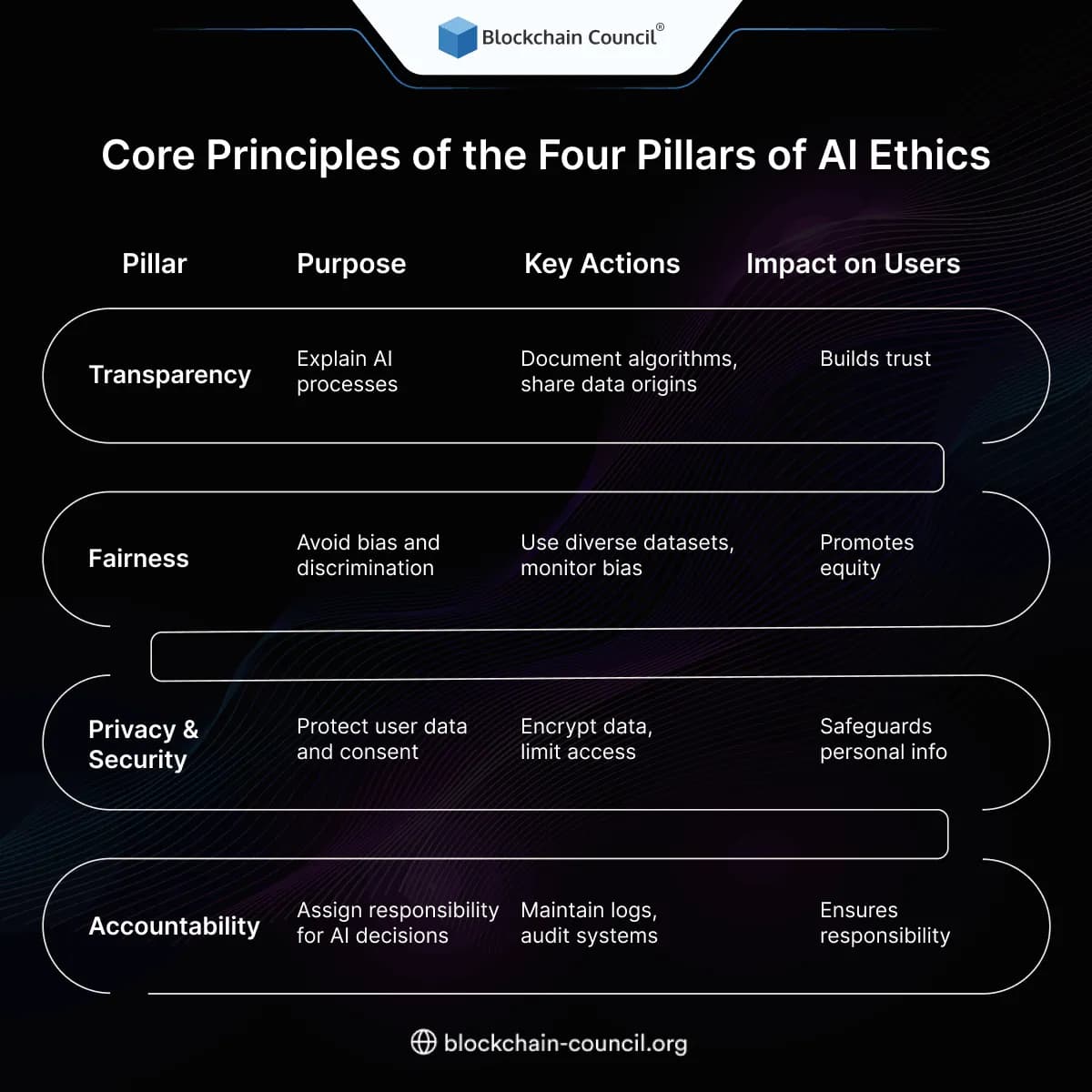
Applying the Four Pillars Across Industries
Each industry applies these pillars differently.
- Healthcare uses fairness to ensure diagnoses are accurate for all populations.
- Finance applies transparency to explain loan approval decisions.
- Retail relies on privacy to protect customer purchase histories.
- Government enforces accountability to maintain public trust.
Industry Applications of the Four Pillars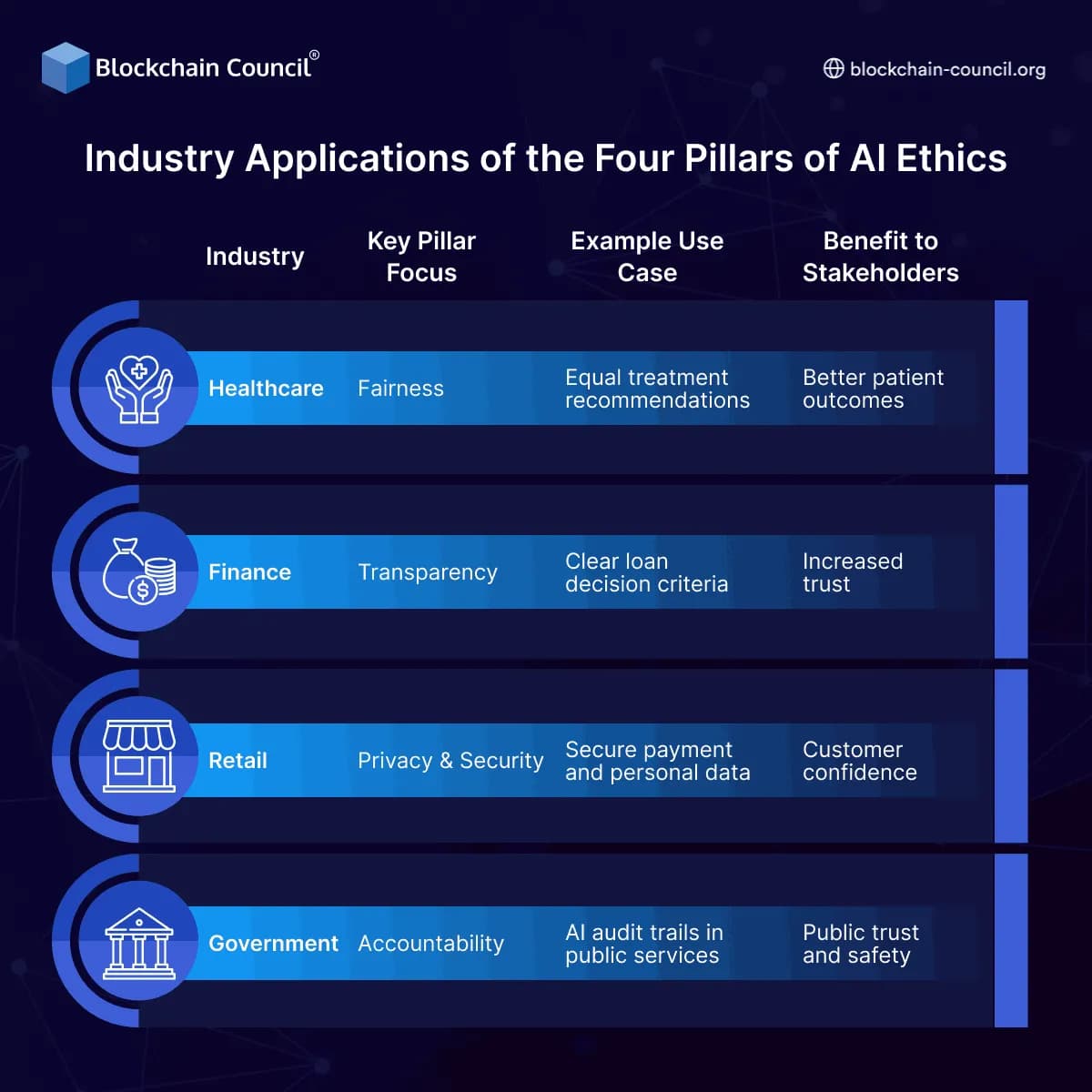
Building Skills in AI Ethics
Understanding the pillars is only the first step. Applying them requires technical skill, ethical reasoning, and industry-specific knowledge. AI professionals can start with AI certs for foundational learning, then specialize with advanced credentials. Continuous education ensures AI remains beneficial as technologies evolve.
Conclusion
The Four Pillars of AI Ethics—Transparency, Fairness, Privacy & Security, and Accountability—are the foundation of responsible AI innovation. They guide how AI should be developed, deployed, and monitored. By applying these principles, businesses can protect users, comply with regulations, and build lasting trust. Whether you are a developer, policymaker, or leader, understanding and implementing these pillars is essential for shaping an ethical AI future.
Related Articles
View All
AI & ML
YouTube Introduces Business Agents for YouTube Ads
YouTube is introducing Business Agent for ads, allowing shoppers to ask product questions, research purchases, and receive personalized guidance directly within YouTube ads.

AI & ML
What is Jev: Typesafe New AI Model
Learn what Jev is, how TypeSafe AI’s new System One model works, and how it delivers fast, structured, probabilistic decisions for software automation.

AI & ML
What Is Strawberry Browser? The Self-Driving Browser Explained
Strawberry Browser is an agentic browser with built-in AI companions that can navigate websites, work across tabs, automate repetitive tasks, extract data, and complete multi-step web workflows.
Trending Articles
The Role of Blockchain in Ethical AI Development
How blockchain technology is being used to promote transparency and accountability in artificial intelligence systems.
AWS Career Roadmap
A step-by-step guide to building a successful career in Amazon Web Services cloud computing.
How Blockchain Secures AI Data
Understand how blockchain technology is being applied to protect the integrity and security of AI training data.