What’s Your Edge Without AI in 2026?
 Michael Willson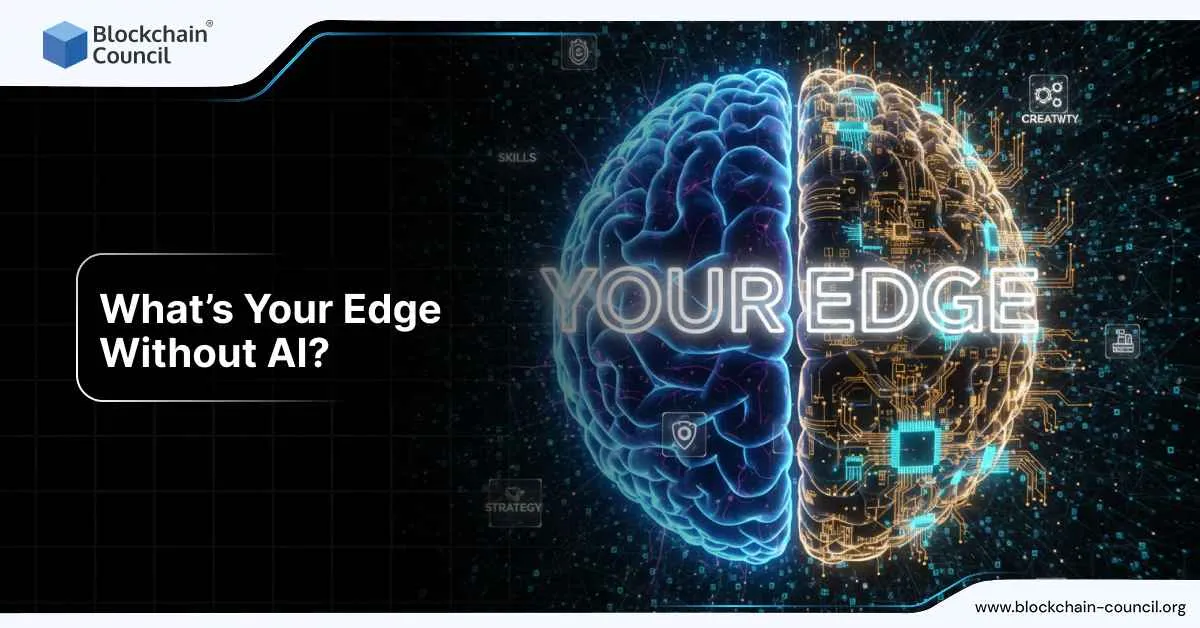
If you are running a business or managing investments in 2026, the question isn’t whether AI matters anymore—it’s what happens if you don’t use it. The truth is simple: without AI, your edge is shrinking fast. Competitors are moving quicker, making smarter decisions, and serving customers better. And while you may still find value in human touch or niche expertise, the market rewards those who adapt. That’s why now is the right moment to upskill with tools like the AI powered investing program if you want to stay relevant.
Why AI Became the Standard in 2026
AI is no longer a futuristic add-on. It’s part of everyday business. From marketing to customer service to investment management, automation and predictive insights are baked into the workflow. Surveys show that nearly 80% of businesses believe AI gives them a competitive edge. Companies that avoid it often report slower decisions and weaker results.

Many professionals who want to use AI more effectively are now actively searching for a Prompt Engineering Course. Unlike generic AI tutorials, a structured Prompt Engineering certification helps individuals and teams learn how to design prompts that improve accuracy, creativity, and business outcomes.
AI-driven data modernization has also become essential. Firms with old, siloed systems take longer to act. Those embracing AI enjoy real-time insights and faster adjustments. This isn’t just about speed—it’s about staying alive in industries where change happens overnight.
What You Lose Without AI
Slower decisions
Relying only on human reports and manual analysis means your business will always lag behind. Markets shift too fast in 2026 for once-a-month reviews to cut it.
Higher costs
Without automation, simple tasks eat up time and money. Errors, duplication, and inefficiencies become expensive. AI cuts these costs, leaving non-AI companies struggling to keep margins.
Weak customer experiences
In an AI-first world, customers expect fast, personal responses. Without AI, service feels slow and generic. Competitors offering personalized experiences will pull customers away.
Missed opportunities
AI systems can see patterns across massive data sets. Without them, you may never spot risks or opportunities until it’s too late. This can cost revenue and market share.
Limited growth
Scaling a business without automation requires more staff and more layers. That slows you down while AI-enabled competitors grow leaner and stronger.
What Edge Can Still Exist Without AI
Even in 2026, not everything is lost if you choose not to adopt AI. Some strengths remain:
- Human relationships: Personal trust and empathy can’t be replaced.
- Specialized expertise: Deep domain knowledge and craft are still valuable.
- Transparency and clarity: Simpler, more explainable systems appeal to customers who distrust AI’s “black box.”
- Ethical positioning: Some clients prefer brands that avoid over-automation or place a focus on human values.
- Niche focus: Smaller, local markets may respond more to personal service than speed.
These edges matter, but they are limited. Without AI, you need to work harder to highlight them.
How Non-AI Players Can Survive
If you’re avoiding AI for now, here are strategies to stay competitive:
- Improve your data practices. Even without AI, better data helps. Clean, unified data means you’re ready if you adopt AI later.
- Invest in people. Continuous training keeps teams adaptable and sharp. Programs like a Data Science Certification are a solid step for building modern skills.
- Lean into human strengths. Creativity, authenticity, and service should be at the center of your strategy.
- Play to niche strengths. Focus where scale is less important and personal service matters more.
- Streamline processes. Even without AI, improving workflows and using basic tech tools can save time and money.
The Role of Learning and Certifications
To keep an edge in 2026, skills matter as much as tools. If you’re working in digital assets, a Crypto certification can sharpen your knowledge of AI-driven markets. If your career path is in building growth strategies, a Marketing and Business Certification will prepare you for AI-shaped industries. For those exploring innovation in tech, blockchain technology courses provide insight into areas where AI and blockchain converge.
The Competitive Impact of Skipping AI Adoption
| Factor | With AI | Without AI |
| Decision-making speed | Real-time, continuous | Slow, manual |
| Costs | Lower through automation | Higher due to inefficiencies |
| Customer experience | Personalized, instant | Generic, delayed |
| Insight detection | Finds hidden patterns early | Misses signals until too late |
| Scalability | Lean and efficient | People-heavy, slow |
| Data handling | Unified and modernized | Outdated, siloed |
| Market competitiveness | Agile, forward-looking | Risk of losing share |
| Employee productivity | Freed from routine tasks | Stuck in repetitive work |
| Trust and explainability | Sometimes opaque | Easier to understand |
| Ethical positioning | Must prove fairness | Can market “human-first” ethics |
Conclusion
By 2026, AI is no longer a luxury. It is the backbone of fast, smart, and efficient business. Without it, your edge is reduced to slower processes, higher costs, and weaker customer experiences. While some human-centered strengths still matter, they are not enough to compete at scale.
The smarter choice is to blend both worlds—human expertise with AI tools. By learning, adapting, and investing in skills, you can secure your future in a landscape where AI is setting the pace. If you are asking what your edge is without AI in 2026, the honest answer is: very little, unless you double down on the areas where humans still shine.