ChatGPT 5 for Engineers

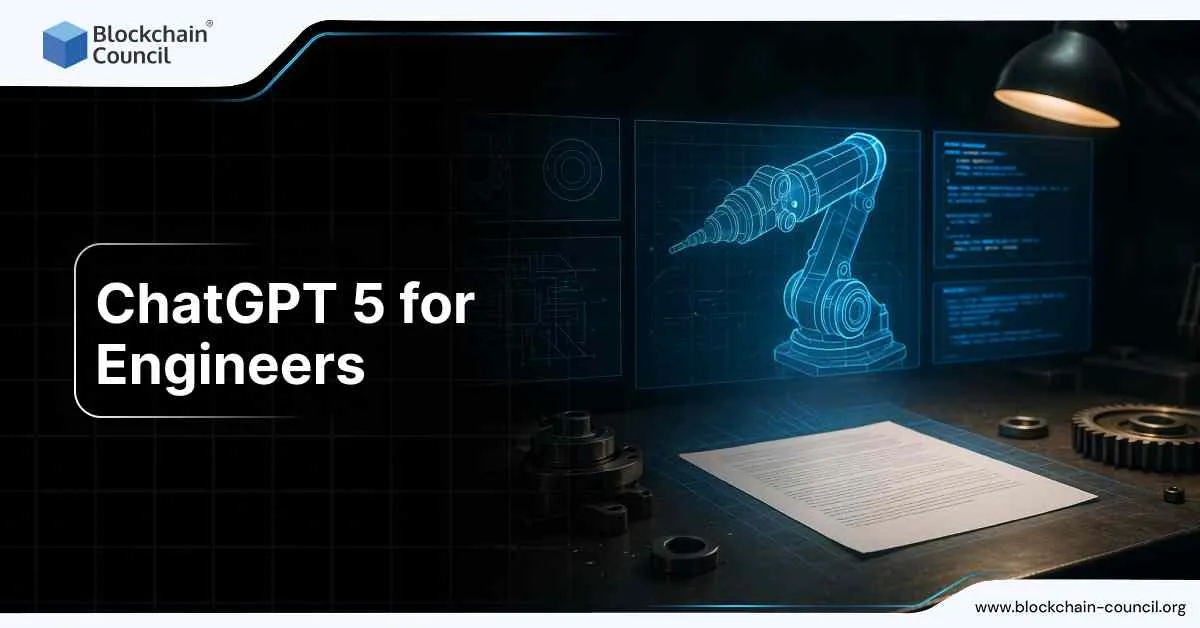
ChatGPT 5 is here, and for engineers, it’s more than just another AI upgrade. It’s faster, smarter, multimodal, and better integrated into real development environments. Whether you are writing code, managing infrastructure, or collaborating on design, ChatGPT 5 offers tools that go beyond simple prompt-response AI. In this article, we’ll explore what makes it valuable for engineers, how it works in practice, and where its limits still show.
Why ChatGPT 5 Matters for Engineers
The moment you log in and start using ChatGPT 5, the difference is clear. It’s not just generating text, it’s running commands, analyzing large projects, and integrating with your tools. Developers are already using it to automate boilerplate code, run quick tests, and even draft system documentation. The real power lies in how it handles complex engineering workflows with minimal setup.

Tool Integration and Agentic Workflows
One of the most significant upgrades is free-form function calling. This lets GPT-5 directly run SQL queries, execute shell commands, and modify config files without relying on rigid JSON structures. That flexibility is a big win for engineers because it makes tool integration smoother and more intuitive.
In environments like Visual Studio Code with GitHub Copilot, GPT-5 is now connected through Azure AI Foundry. The system uses a model router to select the most efficient variant for each task, balancing cost and performance automatically. That means engineers can switch between rapid iterations and deep code analysis without thinking about which model to choose.
These agentic workflows mean GPT-5 doesn’t just give suggestions — it can take actions, chain processes, and coordinate across multiple tools.
Extended Context and Multimodal Support
ChatGPT 5 can handle massive context windows — up to 256K tokens in ChatGPT and as high as 400K in API access. This is a huge benefit for engineers who work on large codebases. You can paste in entire repositories, technical documentation, and design notes, and GPT-5 can keep track of it all in a single conversation.
It also delivers full multimodal capabilities in real time. That means it can process text, images, audio, and even video together. For engineering, this enables tasks like analyzing architecture diagrams, reviewing recorded team discussions, or walking through annotated video tutorials.
Performance, Safety, and Reliability
Engineers know that speed and accuracy matter. GPT-5 is faster and more reliable than its predecessors. It introduces “safe completions” that avoid risky or irrelevant outputs while still delivering useful information.
Hallucinations have been significantly reduced, making it more trustworthy for technical tasks. While no AI model is perfect, this improvement means fewer false positives in debugging and fewer misinterpretations in technical specs.
From an availability perspective, GPT-5 is widely accessible. Free-tier users get access to a smaller “mini” model, while Plus and Pro users have higher limits and full model variants. Enterprises can integrate it directly into private environments.
Common Engineering Use Cases
Engineers are finding ChatGPT 5 useful for:
- Generating boilerplate backend and frontend code
- Reviewing pull requests for common errors
- Creating test cases and automation scripts
- Writing documentation and API references
- Translating code from one language to another
- Designing database schemas from requirements
It’s also gaining traction for infrastructure tasks, such as crafting Terraform configurations or generating Kubernetes manifests on the fly.
Key Engineering Capabilities of ChatGPT 5
| Capability | Benefit for Engineers | Example Task | Efficiency Gain |
| Free-form function calling | Direct tool interaction | Running SQL queries | Saves 10–15 mins per task |
| Massive context window | Handles large codebases | Reviewing entire repos | Reduces context switching |
| Multimodal processing | Understands multiple input types | Analyzing diagrams & logs | Improves accuracy in reviews |
| Safe completions | Reduces risky outputs | Compliance-sensitive work | Minimizes rework |
Where GPT-5 Still Falls Short
Despite the improvements, some engineers remain skeptical. Hands-on testers note that while GPT-5 is excellent for boilerplate and repetitive coding, it struggles with:
- Designing large, complex systems without human guidance
- Debugging deeply interconnected logic issues
- Understanding implicit business needs
- Collaborating in open-ended team discussions
One detailed review called it “the best coding model in the world” but estimated only a 7% jump in automation potential — from 65% to 72%. This means it’s a powerful co-pilot, but not a full replacement for human engineers.
The Career Angle: Skills Engineers Should Add
AI in engineering is only going to grow. Now is the time to build skills that combine technical expertise with AI fluency. Certifications like the ChatGPT certification can help engineers use prompt strategies effectively. If you want to go broader, the AI Certification covers applied AI principles that go beyond coding.
Engineers working with data-heavy applications can benefit from the Data Science Certification. While those eyeing leadership roles in product and strategy might explore the Marketing and Business Certification. For those aiming to master task orchestration in AI-powered workflows, AI certs and prompt engineering skills are becoming critical.
Tips for Engineers to Use GPT-5 in Their Workflow
| Workflow Stage | GPT-5 Role | Tools/Integration | Outcome |
| Planning | Requirements analysis | Chat-based brainstorming | Clearer project specs |
| Development | Code generation & refactoring | VS Code + Copilot | Faster development cycles |
| Testing | Automated test case creation | API & CLI scripts | Reduced QA overhead |
| Deployment | Infrastructure config | Terraform, Kubernetes | Smoother deployments |
What’s Next for GPT-5 in Engineering
OpenAI has indicated that future updates will expand agentic capabilities even further, potentially enabling more autonomous multi-step execution. With broader multimodal adoption, engineers could soon have AI systems that fully understand and execute end-to-end technical tasks.
The trend is clear — GPT-5 is shifting from being a passive assistant to an active participant in engineering work. That means the engineers who thrive will be those who learn to direct AI effectively, verify its outputs, and integrate it into collaborative workflows.
Conclusion
ChatGPT 5 is more than a text generator. For engineers, it’s a context-aware, tool-integrated, multimodal co-pilot that speeds up coding, documentation, and infrastructure work. It’s not replacing software engineers anytime soon, but it is reshaping how they work day to day. The engineers who adapt early will have a competitive advantage in a field where AI fluency is becoming as important as coding itself.