
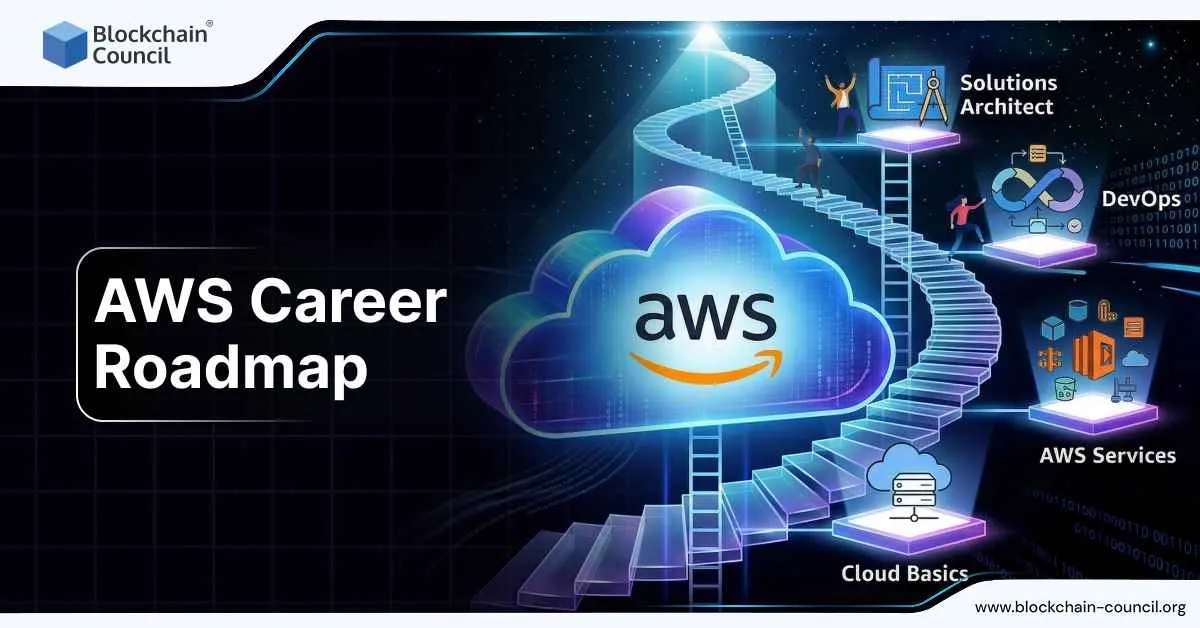
AWS Career Roadmap

Cloud computing has transformed the way businesses build and deliver digital products. Today, companies no longer need to invest in expensive physical servers to run their applications. Instead, they rely on cloud platforms that provide scalable computing power over the internet.
One of the most dominant cloud platforms in the world is Amazon Web Services (AWS). From startups to global enterprises, organizations across industries use AWS to power their digital infrastructure.
For individuals looking to enter the technology industry, learning AWS can open the door to a wide range of career opportunities. The good news is that modern AI tools can significantly accelerate the learning process, making it easier than ever for beginners to start their cloud computing journey.
This comprehensive guide explains how to learn AWS using artificial intelligence tools and build a successful cloud computing career.
What Is AWS?
Amazon Web Services (AWS) is a cloud computing platform that provides on-demand computing resources such as servers, storage, networking, and databases.
Instead of managing physical infrastructure, businesses can deploy applications on AWS servers and scale their resources according to demand. This flexibility makes AWS an essential technology platform for modern digital services.
AWS offers hundreds of cloud services that help organizations:
- host websites and applications
- store and process large amounts of data
- build machine learning models
- manage databases
- deploy global software systems
Because of its reliability, security features, and global infrastructure, AWS has become the largest cloud provider in the world.
Why AWS Skills Are in High Demand
The demand for cloud computing professionals has increased rapidly over the past decade. Organizations are migrating their applications from traditional data centers to cloud platforms to reduce costs and improve scalability.
Industries that rely heavily on AWS include:
- fintech and digital banking
- e-commerce platforms
- media streaming services
- artificial intelligence startups
- enterprise SaaS companies
As a result, companies are constantly searching for professionals who understand how to design, deploy, and maintain cloud infrastructure.
AWS expertise can lead to roles such as:
- Cloud Engineer
- AWS Solutions Architect
- DevOps Engineer
- Cloud Security Engineer
- Infrastructure Engineer
These positions are among the most in-demand technology roles globally.
How AI Is Changing the Way People Learn AWS
Artificial intelligence is transforming the way people learn technical skills. In the past, beginners had to spend weeks reading documentation and watching long tutorials. Today, AI-powered learning assistants can guide learners through complex concepts step by step.
AI tools can help with:
- explaining AWS services in simple terms
- generating code snippets and scripts
- troubleshooting configuration errors
- suggesting cloud architecture solutions
- summarizing technical documentation
For example, a learner can ask an AI assistant how to deploy a web application on AWS, and the system can provide a step-by-step guide.
This interactive learning approach allows beginners to learn faster and solve problems more efficiently.
AWS Career Roadmap for Beginners
Starting an AWS career requires a structured learning approach. Below is a practical roadmap that beginners can follow to build cloud computing skills.
Step 1: Understand Cloud Computing Basics
Before exploring AWS services, beginners should first understand the fundamentals of cloud computing.
Key concepts include:
Virtualization
The technology that allows multiple virtual machines to run on a single physical server.
Networking
Cloud systems rely on secure networks to connect servers, databases, and applications.
Storage Systems
Cloud storage services allow businesses to store and retrieve large amounts of data efficiently.
Scalability
Cloud platforms can automatically increase computing resources during high traffic periods.
Understanding these concepts helps beginners build a strong foundation for learning AWS.
Step 2: Use AI Tools to Learn Faster
AI-powered tools can act as personal learning assistants for AWS beginners.
Instead of searching multiple websites for answers, learners can ask AI tools questions directly and receive clear explanations.
For example, AI tools can help learners:
- understand AWS architecture diagrams
- generate example scripts for deploying servers
- explain security configurations
- debug errors during cloud deployment
Using AI tools makes the learning process more interactive and efficient.
Step 3: Create an AWS Free Tier Account
AWS provides a Free Tier account that allows beginners to experiment with cloud services without paying.
With this account, learners can practice tasks such as:
- launching virtual servers
- hosting websites
- storing data in cloud storage
- building serverless applications
Hands-on experience is crucial for understanding how cloud systems work in real-world environments.
AI tools can also guide beginners during these practice sessions by suggesting configurations and troubleshooting errors.
Step 4: Learn Core AWS Services
AWS provides hundreds of services, but beginners should focus on a few core services first.
Important AWS services include:
Amazon EC2
Provides virtual machines that allow users to run applications in the cloud.
Amazon S3
A scalable storage service used for storing files, backups, and application data.
AWS Lambda
A serverless computing service that runs code automatically without managing servers.
Amazon RDS
A managed database service used for storing structured data.
IAM (Identity and Access Management)
Controls user permissions and security access within AWS environments.
Understanding these services forms the foundation of AWS cloud architecture.
Step 5: Build Practical AWS Projects
Projects are one of the most effective ways to learn AWS.
Instead of only reading about cloud services, beginners should build small applications using AWS infrastructure.
Example beginner projects include:
- hosting a static website on AWS
- creating automated cloud backups
- building a serverless application
- deploying a simple web API
AI tools can help learners design these projects, generate configuration scripts, and explain architecture decisions.
Completing multiple projects helps learners build practical experience that employers value.
Step 6: Learn Cloud Automation and DevOps
As learners gain experience, they should explore advanced topics such as automation and DevOps.
Important topics include:
Infrastructure as Code
Allows engineers to deploy cloud environments using scripts.
Continuous Integration and Continuous Deployment (CI/CD)
Automates the process of building and deploying software.
Containerization
Technologies like Docker and Kubernetes help manage application environments.
Automation is essential for managing large-scale cloud systems efficiently.
Step 7: Earn AWS Certifications
AWS certifications validate cloud computing skills and improve career opportunities.
Popular certifications include:
- AWS Certified Cloud Practitioner
Best for beginners learning cloud fundamentals. - AWS Solutions Architect Associate
Focuses on designing scalable cloud architectures. - AWS Developer Associate
Designed for developers building applications on AWS. - AWS DevOps Engineer
Focuses on automation and infrastructure management.
Certifications help professionals demonstrate their knowledge to employers.
People Also Ask
Is AWS a good career in 2026?
Yes. Cloud computing continues to grow rapidly as companies move their infrastructure online. AWS professionals are in high demand, and the field offers strong salary potential and global job opportunities.
Can beginners learn AWS with AI?
Yes. AI learning assistants can simplify AWS concepts, generate example projects, and help troubleshoot errors. This makes it easier for beginners to learn cloud computing skills faster.
How long does it take to learn AWS?
For beginners, it typically takes 3–6 months of consistent learning and practice to understand AWS fundamentals and prepare for entry-level certifications.
Do you need coding skills for AWS?
Basic programming knowledge is helpful but not always required for beginner roles. Many AWS tasks involve configuring services rather than writing complex code.
However, learning programming languages such as Python can significantly improve career opportunities.
Career Opportunities After Learning AWS
After gaining AWS skills and certifications, professionals can pursue multiple career paths in cloud computing.
Common job roles include:
Cloud Engineer
Responsible for building and maintaining cloud infrastructure.
AWS Solutions Architect
Designs scalable and reliable cloud systems.
DevOps Engineer
Focuses on automation and deployment pipelines.
Cloud Security Engineer
Ensures cloud environments remain secure.
These roles are highly valued across technology companies, startups, and enterprises.
The Future of AWS and AI Careers
Cloud computing and artificial intelligence are two technologies shaping the future of digital innovation.
Many modern applications rely on both AI models and scalable cloud infrastructure. For example, machine learning models often run on AWS servers that provide the computing power required for training and deployment.
Professionals who understand both AI tools and cloud computing platforms like AWS will have a significant advantage in the technology job market.
Final Thoughts
Starting an AWS career is one of the most promising paths for entering the technology industry. With the support of AI-powered learning tools, beginners can understand cloud concepts faster and gain practical experience through projects and experimentation.
By following a structured roadmap—learning cloud fundamentals, practicing with AWS services, building projects, and earning certifications—any motivated learner can develop valuable cloud computing skills.
As the digital economy continues to expand, AWS professionals will play a crucial role in building and managing the infrastructure that powers modern applications.