Augmented Stadiums for World Cup 2026

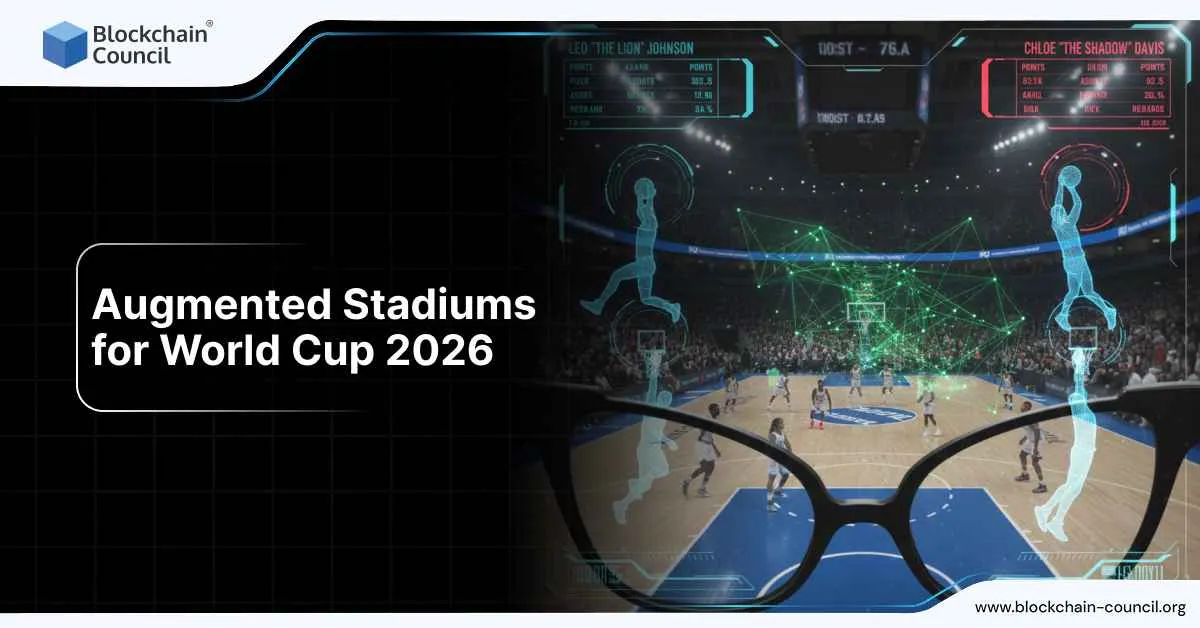
The FIFA World Cup 2026 is set to become the most digitally enhanced tournament in football history. With 48 teams, 16 stadiums across the United States, Canada and Mexico, and an expected global audience of more than 5 billion, this event is being prepared as the first truly augmented World Cup. Stadiums across all three host nations are upgrading their infrastructure with real time augmented reality layers, advanced connectivity systems and intelligent fan guidance technologies. Professionals who want to understand how these systems work often begin by strengthening their foundation through the AR VR Certification since AR powered venue systems rely heavily on spatial computing, sensor fusion and real time graphics.
Why World Cup 2026 Stadiums Are Being Upgraded Now
The tournament runs from June 11 to July 19, 2026, and it will be the first time an expanded 48 team format increases match count to 104 games. This massive scale requires better control of crowd movement, faster information systems and more immersive fan engagement tools.

Starting in early 2024, host cities began submitting technology upgrade plans to FIFA that focused on three areas:
- High density wireless connectivity for tens of thousands of fans using AR features.
- IoT sensor grids to track crowd flow, temperature changes and queue buildup.
- Edge computing to process match data and analytics in real time for AR displays.
By late 2025, stadiums in Los Angeles, New York, Dallas and Toronto were already testing early versions of real time AR overlays that could appear inside mobile apps or on large in stadium displays.
The Technology Enabling Augmented Fan Experiences
The shift toward augmented stadiums is part of a larger global trend. Analysts estimate that the smart stadium market will grow from about USD 8.35 billion in 2024 to nearly USD 28 billion by 2032. A significant portion of that investment is tied to AR driven fan engagement, real time data visualization and digital wayfinding systems.
Key systems being deployed include:
- 5G powered networks
These allow tens of thousands of devices to access data heavy AR features without lag.
- Computer vision cameras
These identify player movement, ball trajectory and tactical shapes, feeding analytics into AR layers visible to fans.
- Geolocation beacons and IoT sensors
These support indoor navigation, queue management and crowd safety.
- LED super screens designed for AR overlays
Many World Cup 2026 stadiums are replacing older boards with screens optimized for deep contrast visuals that support AR graphics.
Cities like Los Angeles, New York and Miami have begun integrating these systems into their World Cup readiness plans, which include pilot testing during other large events.
How Fans Will Use Augmented Features During the Tournament
For the first time in a major global event, fans inside stadiums and viewers at fan zones will have access to layered information in real time.
Expected features include:
- Live AR statistics such as player speed, shot probabilities and heat maps.
- AR wayfinding that guides fans to restrooms, gates or concession stands with color coded overlays.
- AR enhanced replays offering alternate viewing angles through mobile devices or dedicated viewing zones.
- Personalized digital boards that can greet fans or direct them to less crowded exits after the match.
Several stadiums are also expected to use AR enabled security alerts that guide fans safely during emergencies.
This level of digital augmentation requires strong backend computing, which is why host cities have invested heavily in private 5G systems and distributed edge servers. Many professionals tracking such infrastructure upgrades strengthen their understanding through programs offered by the Tech Certification since the systems span networking, computing, sensors and applied AI.
Examples of Early AR Stadium Deployments
Even before World Cup preparations, major North American venues have tested these technologies.
- SoFi Stadium in Los Angeles has piloted AR layered performances during concerts and sports events.
- AT&T Stadium in Texas has tested AR driven fan games during NFL events.
- BMO Field in Toronto is upgrading systems to support real time data overlays as part of the World Cup expansion.
Although these pilots were smaller in scale, they formed the blueprint for the broader rollout expected in 2026.
What Makes the 2026 Tournament Uniquely Ready for Augmented Reality
Unlike previous tournaments, World Cup 2026 benefits from a combination of timing, infrastructure growth and fan behavior.
Three forces converge:
- Maturity of 5G networks by 2025
All three host nations now operate dense 5G grids with stadium level capability.
- Mass adoption of AR ready devices
A majority of fans will bring phones capable of running real time AR rendering.
- Advances in computer vision and AI analytics
These systems can process live sports data with less than one second delay.
This allows stadiums to move beyond simple apps and create fully immersive “digital layers” on top of physical spaces.
Challenges Stadiums Still Need To Overcome
Even with new infrastructure, several practical issues must be addressed before full scale AR deployment in June 2026.
- Device variability: Not all fans will have high end AR capable phones.
- Battery demands: AR is power intensive, especially in long matches.
- Cybersecurity: Large connected events face increased risk, so stadiums must harden networks.
- Crowd behavior unpredictability: AR wayfinding must adapt instantly when large groups move unexpectedly.
These challenges are being addressed through fallback systems, distributed compute nodes and layered security protocols.
How Augmented Stadiums Transform Engagement Beyond 2026
The upgrades for World Cup 2026 are not temporary. Stadiums plan to reuse the infrastructure for concerts, American football, baseball, esports events and other global tournaments.
The long term vision includes:
- Personalized AR merchandise previews.
- Stadium wide AR game layers for fan interaction.
- Smart advertising systems geo targeted to clusters of fans.
- VR replay booths with immersive viewing for premium ticket holders.
This positions World Cup 2026 as a milestone event not only for football but for the future of global live entertainment. Organizations preparing for this transformation often explore advanced learning paths like the Marketing and Business Certification since AR powered engagement is becoming central to modern fan experience design.
Final Thoughts
Augmented stadiums are set to define the World Cup 2026 experience. Host cities across North America are transforming traditional venues into intelligent, interactive environments capable of delivering real time analytics, navigation support and immersive entertainment. With 5G networks, edge computing, AR software and sensor based infrastructure converging, this tournament will showcase how digital experiences can enrich live sports at a global scale.