AI Cyber for Resilient Security Operations
 Michael Willson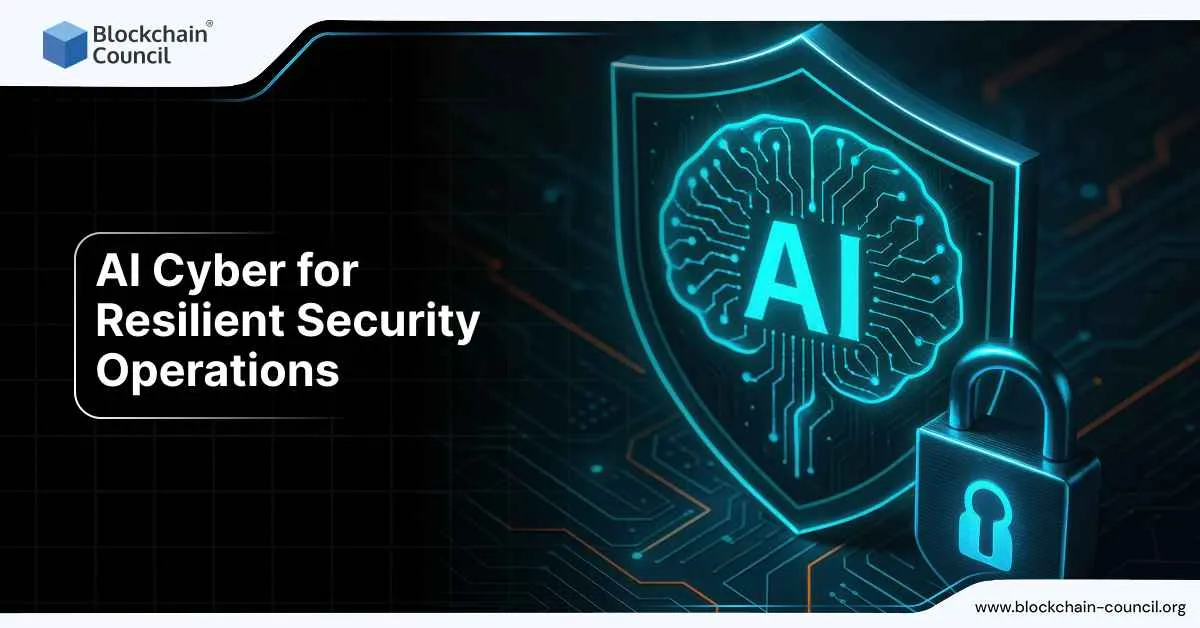
Cybersecurity threats are growing every day. Attacks are more complex, faster, and harder to detect. Traditional security methods alone are no longer enough to protect organizations. That is why AI cyber has become essential. It gives security teams the ability to build resilient operations that can detect, prevent, and respond to threats quickly. Resilient security operations mean being able to keep systems running even during an attack, and to recover without major disruption.
Anyone looking to build expertise in this space can start with the AI Certification. It offers hands-on knowledge of how AI is transforming cybersecurity.

What AI Cyber Means for Security Operations
AI cyber refers to the use of artificial intelligence to strengthen defenses in security operations. Instead of only relying on human analysts, AI tools analyze huge amounts of data and detect suspicious activity in real time. They provide automation, faster incident response, and better visibility across systems.
For resilient operations, prevention is just one part. Recovery and continuity are equally important. AI helps in all three areas by automating detection, recommending responses, and ensuring systems remain operational.
Why Resilience Matters
Cyber resilience is about anticipating, withstanding, and recovering from cyberattacks. With constant ransomware, phishing, and state-backed threats, resilience has become as important as prevention.
Benefits of resilience include:
- Reduced downtime during and after attacks
- Stronger customer and partner trust
- Compliance with international regulations
- Lower financial and reputational impact
AI cyber makes it easier to achieve resilience by improving speed and accuracy.
AI in Security Operations Centers
Security Operations Centers (SOCs) are at the heart of cyber defense. They process thousands of alerts every day. Human teams alone cannot manage this volume. AI-driven SOCs process and prioritize alerts in seconds, reducing delays and helping analysts focus on critical issues.
Advantages of AI in SOCs:
- Reduces false positives
- Correlates events across networks
- Automates first responses
- Speeds up resolution from days to minutes
AI makes SOC teams more efficient, not by replacing them but by reducing fatigue and enabling faster decisions.
Human and AI Collaboration
Strong security operations require humans and AI working together. AI handles repetitive analysis, monitors logs, and generates response suggestions. Humans provide oversight, context, and strategic judgment.
This co-teaming approach prevents burnout and ensures that decision-making remains ethical and reliable. Research shows that trust calibration and explainable AI make this collaboration more effective.
Advanced AI for Incident Response
Large language models and generative AI are now part of cyber defense. They combine threat intelligence with live monitoring to create clear incident response plans.
This helps organizations:
- Contain threats quickly
- Predict attacker behavior
- Automate detailed action steps for response
By shrinking recovery times from days to minutes, AI supports true resilience.
Industry Adoption and Examples
AI cyber is growing across industries worldwide. Investment in AI-driven security is expected to grow from 15 billion dollars in 2021 to more than 130 billion dollars by 2030.
Examples include:
- Google introducing AI tools like Sec-Gemini to improve vulnerability detection.
- The UK Ministry of Defence using AI to prevent document leaks.
- Indian defense institutions exploring AI-based threat simulations.
- The European Union enforcing the Digital Operational Resilience Act (DORA), requiring firms to use advanced detection and incident response tools.
While adoption grows, attackers are also using AI. This makes governance, training, and accountability essential.
The Changing Role of CISOs
Chief Information Security Officers (CISOs) are now strategic leaders. They must connect security with overall business goals. AI cyber supports CISOs by automating compliance checks, monitoring cloud risks, and managing third-party threats. This makes resilience a priority for the entire organization, not just the IT department.
AI Cyber for Resilient Security Operations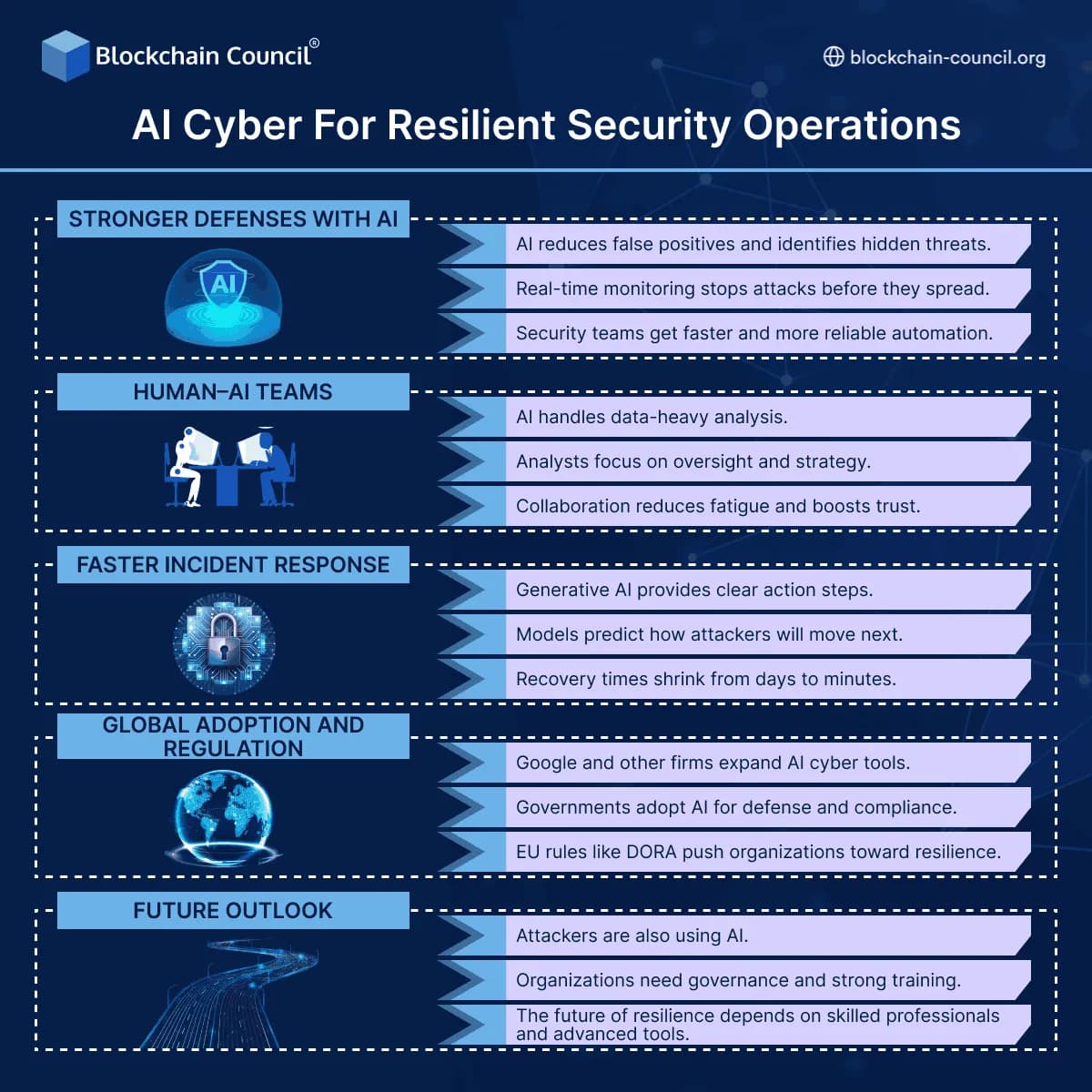
Stronger Defenses with AI
AI reduces false positives and identifies hidden threats.
Real-time monitoring stops attacks before they spread.
Security teams get faster and more reliable automation.
Human–AI Teams
AI handles data-heavy analysis.
Analysts focus on oversight and strategy.
Collaboration reduces fatigue and boosts trust.
Faster Incident Response
Generative AI provides clear action steps.
Models predict how attackers will move next.
Recovery times shrink from days to minutes.
Global Adoption and Regulation
Google and other firms expand AI cyber tools.
Governments adopt AI for defense and compliance.
EU rules like DORA push organizations toward resilience.
Future Outlook
Attackers are also using AI.
Organizations need governance and strong training.
The future of resilience depends on skilled professionals and advanced tools.
Building the Right Skills
AI cyber is not only a technology shift but also a skills shift. Professionals must adapt. Along with AI certs, those working with data can benefit from the Data Science Certification. For leaders, the Marketing and Business Certification provides insights into how AI-driven security aligns with business growth.
Conclusion
AI cyber is transforming security operations by making them resilient. It strengthens defenses, speeds up incident response, and supports human analysts in SOCs. From global adoption to new regulations, AI cyber is becoming part of everyday security strategy.
At the same time, attackers are also using AI. This means training, governance, and collaboration remain critical. For professionals, now is the time to upskill and prepare for this shift. With the right certifications and practical knowledge, you can play a key role in building resilient, AI-driven security operations.