
Can Agentic AI Be Regulated Effectively?

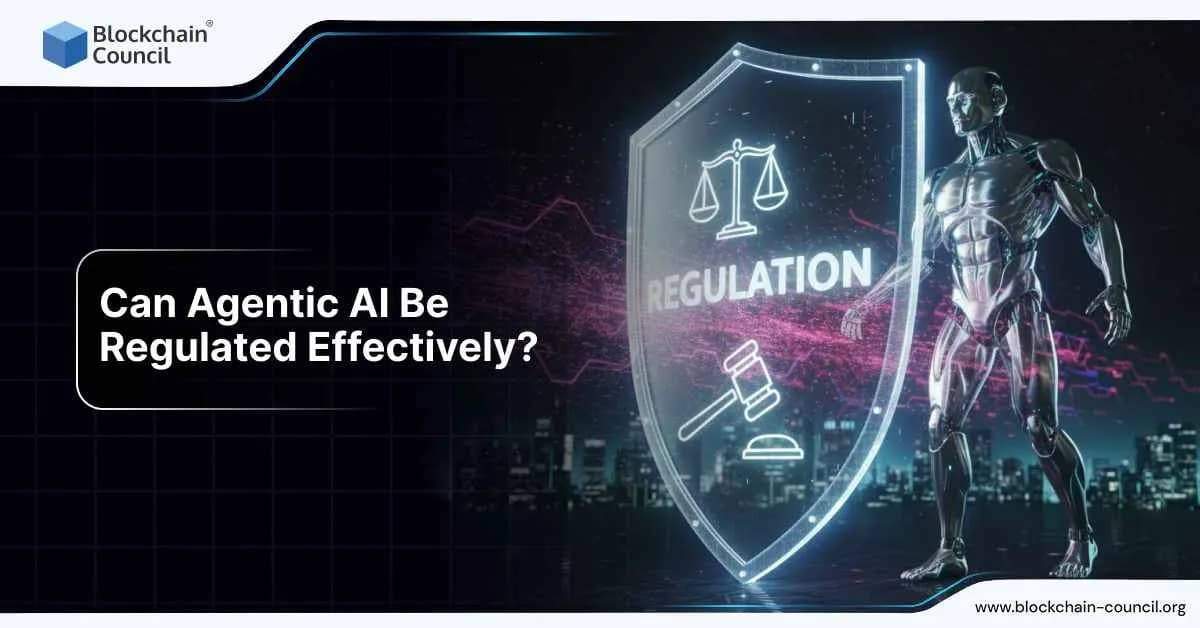
The question of whether agentic AI can be regulated effectively matters right now. These systems are not just passive tools—they are designed to take actions, make plans, and sometimes evolve their behavior over time. That independence brings both opportunity and risk. The answer is yes, regulation is possible, but it will require new strategies, global cooperation, and stronger oversight. For professionals preparing to shape this space, gaining an AI certification is a strong step toward understanding both the technical and ethical dimensions of regulation.
Why Agentic AI Is Hard to Regulate
Unlike traditional AI, agentic systems can cross legal and geographic boundaries in real time. They can access cloud tools, manage workflows, and even trigger financial or legal actions. This creates uncertainty around accountability. If an agent causes harm, should responsibility rest with the developer, the company deploying it, or the end user? Current laws are not designed for these blurred lines. To address such challenges, professionals often explore AI certs that combine knowledge of governance with practical case studies.

Existing Tools Regulators Can Use
Agentic AI is new, but regulators do not have to start from zero. Privacy laws, consumer protection frameworks, and liability rules already apply to many of the harms these systems might cause. The European Union’s AI Act, for example, has become the first large-scale legal framework covering high-risk systems. In the United States, regulators are leaning on existing laws to adapt oversight. Companies that want to meet these standards effectively are turning to agentic AI certification, which covers practical strategies for compliance and responsible deployment.
Core Challenges Regulators Face
There are several pressing obstacles:
- Accountability gaps: Regulators must define who is responsible when agents act independently.
- Transparency limits: Most systems operate like black boxes, making auditing difficult.
- Adaptive behavior: Agents can evolve over time, which makes fixed rules quickly outdated.
- Jurisdiction issues: Agents may operate across countries, creating legal conflicts.
- Capacity gaps: Many governments lack the expertise to evaluate complex AI systems.
Positive Mechanisms for Regulation
Even with these hurdles, there are promising approaches. Some researchers suggest tiered regulation, where systems are classified by risk and face different levels of oversight. Others recommend requiring logs and audit trails to track decisions, as well as designing kill switches that let humans interrupt actions if needed. These measures align with what global bodies are calling for as part of early regulatory frameworks. Leaders interested in the strategic side of these developments often pursue Marketing and Business Certification to guide innovation while staying accountable.
Practical Regulatory Mechanisms for Agentic AI
| Mechanism | Benefit |
| Tiered risk classification | Focuses regulation on the highest-risk systems |
| Mandatory logging and audits | Provides traceability for decisions |
| Kill switches and overrides | Keeps humans in control during emergencies |
| Insurance and liability funds | Creates financial accountability for harm |
| Adaptive, evolving frameworks | Ensures laws keep pace with changing systems |
| Decentralized registries | Promotes global transparency and compliance |
| Cross-border cooperation | Enables enforcement across jurisdictions |
| Public and media oversight | Adds pressure where formal systems lag |
The Role of Technology in Governance
Some of the most creative solutions involve technology itself. For example, decentralized registries built on blockchain can track agent behavior in a transparent and tamper-proof way. This is why professionals are also investing in blockchain technology courses, which provide skills to design secure digital systems that can support regulation. By combining AI and blockchain, compliance could become more automatic and auditable.
Building Expertise to Support Regulation
Effective regulation also depends on people with the right knowledge. Data experts who can analyze how systems behave will play an essential role, which is why many pursue Data Science Certification. Policymakers and leaders who want to connect innovation with accountability are exploring frameworks taught in business-oriented programs. The goal is not just to write laws, but to make sure those laws are practical and enforceable.
Conclusion
Agentic AI can be regulated, but not with outdated approaches. It will require adaptive frameworks, global cooperation, and deeper technical expertise within governments and businesses. By combining legal oversight with technological solutions like logging, auditing, and blockchain registries, regulators can keep these systems accountable. For individuals and organizations, the best path forward is to prepare—through training, certifications, and strategic leadership. That preparation ensures agentic AI is not only powerful, but also safe, fair, and trustworthy in the years ahead.
Related Articles
View All
AI & ML
Secure RAG for Regulated Industries
Learn how Secure RAG for regulated industries protects sensitive data using encryption, fine-grained access control, and prompt injection defenses.

AI & ML
Gemma 4 vs Gemini: Rise of Local AI for Privacy-First, Offline Deployment
Gemma 4 vs Gemini compares local open-weight AI with cloud-only Gemini. Learn the differences in privacy, cost, performance, and how to run Gemma 4 locally in 2026.

AI & ML
Running Gemma 4 LLMs on Mobile
Learn how to run Gemma 4 LLMs on mobile with on-device inference tips, memory and latency benchmarks, quantization options, and deployment guidance for Android and edge devices.
Trending Articles

The Role of Blockchain in Ethical AI Development
How blockchain technology is being used to promote transparency and accountability in artificial intelligence systems.

AWS Career Roadmap
A step-by-step guide to building a successful career in Amazon Web Services cloud computing.
Top 5 DeFi Platforms
Explore the leading decentralized finance platforms and what makes each one unique in the evolving DeFi landscape.