

Adobe Launches Firefly App with OpenAI, Google AI Models
 Michael Willson
Adobe has launched a powerful new version of its Firefly app that integrates advanced AI models from OpenAI and Google. With this move, Adobe aims to give users a wider range of generative AI tools inside a single creative platform. Whether you’re creating images, generating video, or collaborating with a team, the updated Firefly app is designed to offer more flexibility, better results, and faster workflows.
This article covers everything you need to know about Adobe’s Firefly upgrade — including the new features, how it compares with other tools, who it’s for, and why it’s a game changer for creative professionals, marketers, and educators.

What Is Adobe Firefly?
Firefly is Adobe’s suite of generative AI tools built for creators. It works across the Creative Cloud ecosystem and allows users to create content using natural language prompts. Initially focused on image generation, Firefly now supports text-to-video, image editing, and collaborative features — all backed by Adobe’s ethical AI standards.
What’s New in the Latest Firefly App
Adobe’s 2025 update to Firefly includes major changes:
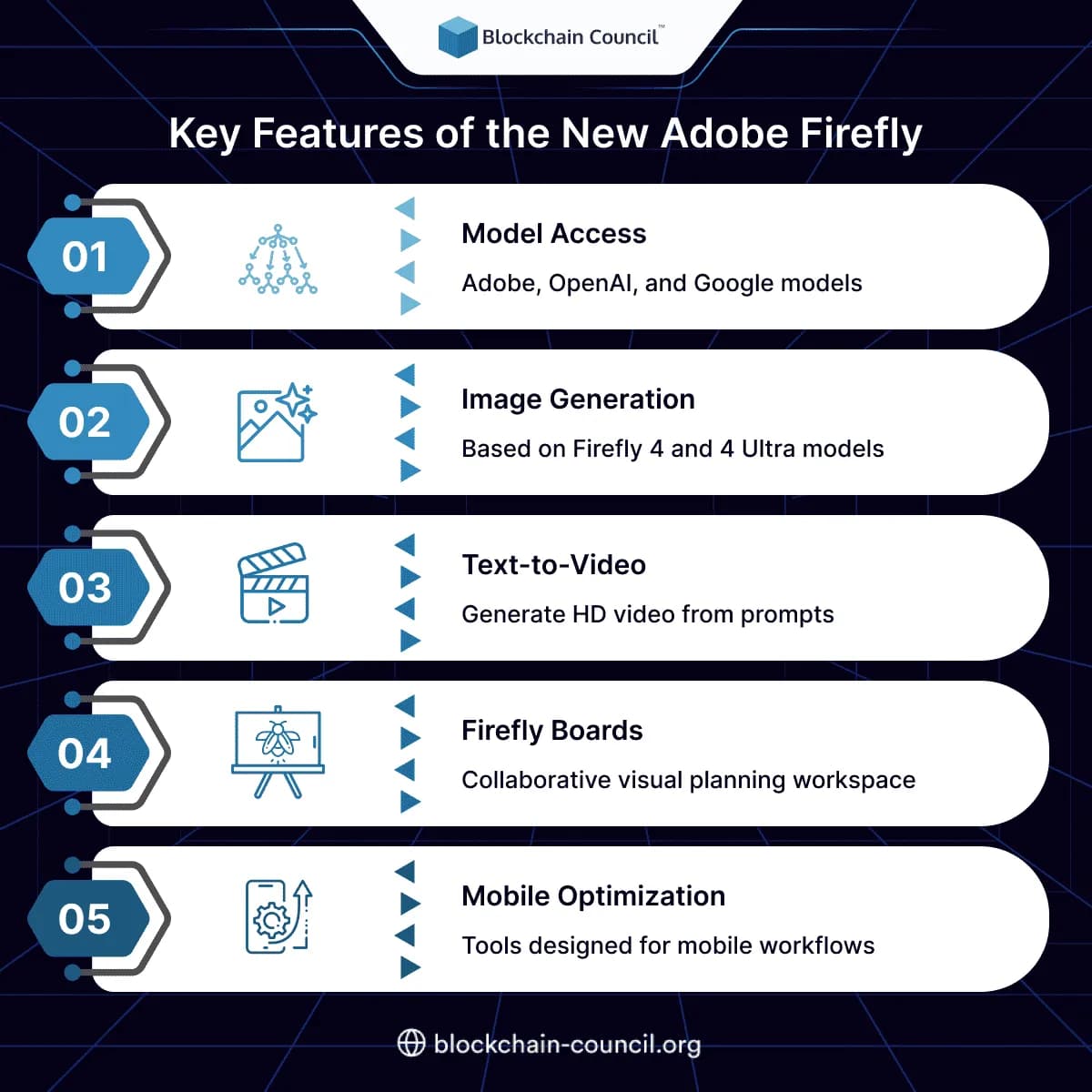
- Third-party AI integration: Users can now generate content using models from OpenAI (like DALL·E) and Google’s Gemini/Imagen models.
- Firefly Image Model 4 and 4 Ultra: These new models improve image sharpness, style control, and prompt accuracy.
- Text-to-video capabilities: Generate short 1080p video clips from text descriptions.
- Firefly Boards: A new collaboration tool that allows teams to brainstorm ideas visually.
- Mobile-friendly design: Adobe is optimizing Firefly tools for mobile creators.
Why This Update Matters
Before this update, Adobe Firefly used only Adobe’s own models. Now, it gives users access to a mix of internal and external AI tools — expanding what’s possible.
- Creators get more artistic styles and realism.
- Marketers get faster ad creative production.
- Teachers and students get tools for visual learning content.
It’s a major step in giving everyday users access to pro-level AI models — no extra logins or tools needed.
Key Features of the New Adobe Firefly
Comparison with Other AI Creative Tools
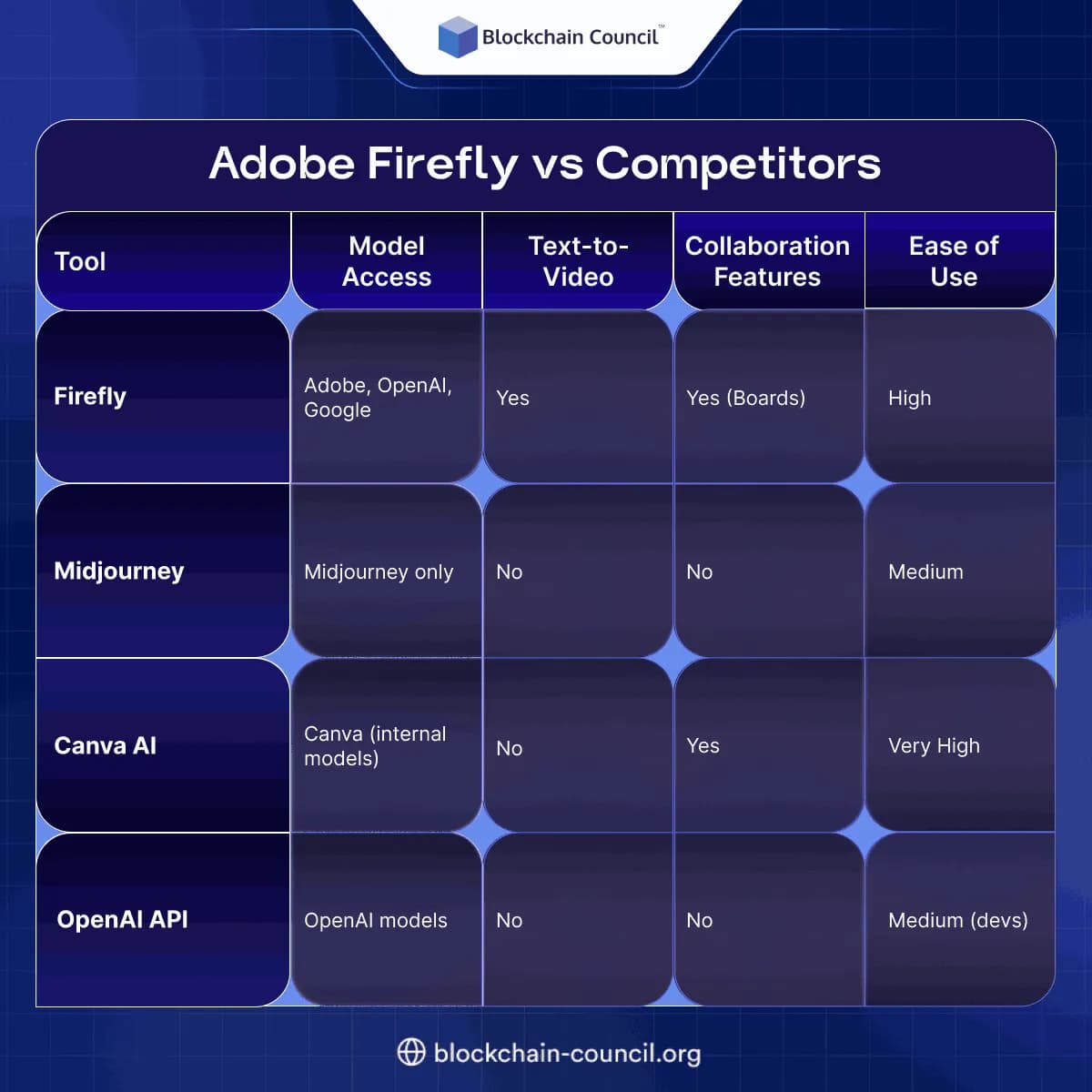
Adobe Firefly now competes directly with tools like Canva AI, Midjourney, and OpenAI’s standalone APIs. Here’s how it compares:
- Midjourney: Great for artistic visuals, but no text-to-video support or third-party integrations.
- Canva AI: Good for social media content, but lacks high-quality video and advanced model options.
- OpenAI DALL·E API: Offers great output via API, but lacks visual collaboration tools like Firefly Boards.
Adobe Firefly vs Competitors
Who Can Use Firefly
Firefly is built for:
- Designers: Create images, assets, and mockups with custom styles
- Marketers: Generate creative ads, landing page visuals, and social media posts fast
- Educators: Develop presentations, infographics, and explainer visuals
- Small businesses: Create branding and content in minutes, not days
- Content creators: Make thumbnails, banners, storyboards, and now videos
Adobe’s integration of Google and OpenAI models means these users can now explore different styles, tones, and visual formats with fewer limitations.
Why Adobe Is Partnering with OpenAI and Google
Adobe wants to be the all-in-one creative platform. Instead of competing with OpenAI or Google, it’s combining their tech into one place — saving users time and increasing output quality.
By offering multiple models in one platform:
- Users get choice and control
- Creative professionals get diversity of output
- No need to bounce between multiple tools
Conclusion
Adobe’s Firefly relaunch is a smart move that blends the best of its own creative tools with the world’s leading AI models. It simplifies content creation while giving users serious creative power — from marketers to educators to entrepreneurs.
If you’re interested in learning how these AI systems work behind the scenes, try this AI Certification to explore topics like model integration, prompt engineering, and ethical use.
Want to build AI tools that process and visualize real-world data? Start with a Data Science Certification to learn Python, machine learning, and more.
Or if you’re focused on business growth, branding, and digital marketing strategies, the Marketing and Business Certification will give you the tools to lead in the age of AI.
Related Articles
View All
AI & ML
Google Launches Gemini 4 Argon: Features and Capabilities
Google has launched Gemini 4 Argon, its flagship AI model for coding, finance, law, cybersecurity and science. Learn its key features, availability, pricing and safety details.

AI & ML
OpenAI Launches GPT 6.1-Sol
OpenAI launches GPT-6.1 Sol, a new reasoning model offering near-Astra performance at lower cost for complex coding, computer use, agentic workflows, and professional tasks.

AI & ML
Meta Launches Muse Wonder: Its New AI Model Explained
Meta has launched Muse Wonder and Muse Wonder Full, new AI models built for personal and professional agents. Learn the features, pricing, access options and how they compare with rivals.
Trending Articles
The Role of Blockchain in Ethical AI Development
How blockchain technology is being used to promote transparency and accountability in artificial intelligence systems.
AWS Career Roadmap
A step-by-step guide to building a successful career in Amazon Web Services cloud computing.
How Blockchain Secures AI Data
Understand how blockchain technology is being applied to protect the integrity and security of AI training data.