

What is Tokenization?
 Suyash Raizada
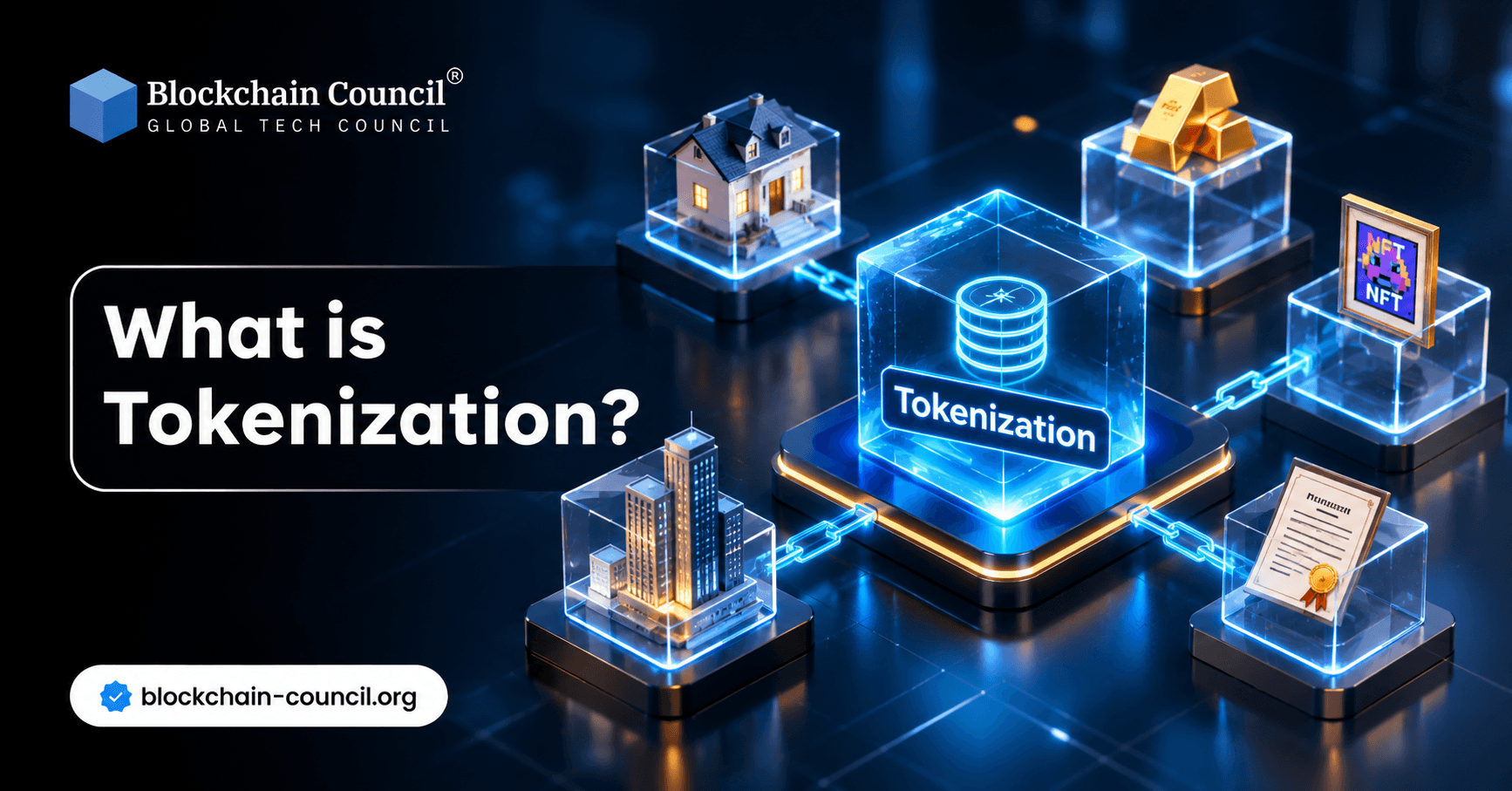
In this article, we will learn about the basics of tokenization, how it works, and its practical use cases.
Almost everyone has sent pictures over the internet. If not, then at least you have emailed others. So, when you send an email over the internet, the protocol and the underlying technology copy the email and send it to the receiver. This way, both you and the receiver have a copy of the email.

You and the email receiver can send the same email to an uncountable number of people, and the email keeps on copying. It is excellent, but it is not feasible when it comes to sending money over the internet. How would you like to hold a currency, and the value drops with each subsequent transaction?
Obviously, this is where financial institutions and banks come in. They help facilitate money transactions over the internet without losing their value.
But, with the explosion of blockchain technology, we all are looking for ways to eliminate intermediaries. One way of sending money over the internet with no intermediaries is tokenization.
What is Tokenization?
Tokenization is the process of transforming ownerships and rights of particular assets into a digital form. By tokenization, you can transform indivisible assets into token forms.
For example, if you want to sell the famous painting Mona Lisa. You would need to find a seller who wants to shell out millions of dollars for it. Clearly, this reduces the number of people who have enough liquid cash worthy of buying it. But if we tokenize the painting. Then we can have multiple people with whom the ownership of that painting be shared.
Specifically, fractional ownership is possible. Say someone can be 1/25 owner of a painting or asset. It is only possible with tokenization, which provides an adequate solution over traditional solutions. Therefore, most cryptocurrency experts will bet on its usage and future prospects. That is why most experts suggest upskilling with a cryptocurrency course.
Tokenization in blockchain opens up multiple new possibilities for businesses and individuals. IDC, the global market intelligence firm, puts the tokenized asset market on the blockchain to be around $500 billion. The number is mind-blowing, but the concept of tokenization is not new and has been around for some decades.
Before the introduction of blockchain technology, we have used tokenization, especially in financial institutions from the 1960s, to safeguard our credit card details and transaction statements. Even hospitals use them to keep sensitive patient information, and governments use them to keep track of voter registration.
Traditional tokens save the information as alphanumeric tokens and later pass through a cryptographic function. This process makes sure that each token is unique. Blockchain tokenization is like this process.
But blockchain tokenization provides some additional benefits.
Flexible tokenization of assets
It comes with security similar to that of a cryptocurrency security
Potential for broad application of tokens
The technology behind blockchain tokens
We implement tokens using smart contracts in the blockchain, also known as token contracts. These contracts are computer programs that help verify the business rules and help transfer values from one user’s wallet to the next.
There are two basic ways to transfer values using a smart contract.
First is the UTXO model. They introduced it by implementing the bitcoin technology, and many cryptocurrencies use this model. UTXO works by determining the amount of digital currency left in a user’s account after a successful cryptocurrency transaction.
Then we have the Account-based model, which is used by Ethereum and Hyperledger fabric. When an order takes place, the nodes that are the network’s validators debit the amount from the sender’s account and credit it to the receiver’s account.
Types of Tokens
Security tokens
They are tokens that help validate the ownership of a particular asset or rights. They are the digital representation of an underlying asset. Along with that, they have all the benefits of traditional securities. Moreover, in security tokens, we can program it with the help of a cryptocurrency developer to have unique characteristics and features that suit our needs.
For example, you can trade real estate tokens and pay using the cryptocurrency of that chain.
Then there are some tokens whose value is determined by the underlying asset, such as those with off-chain assets like real estate, invoices-the more valuable the asset, the costlier the token.
In real-world asset (RWA) tokenization, connecting physical assets with blockchain networks requires reliable external data. This is where oracles in RWA tokenization become important. Blockchain oracles provide smart contracts with verified information about off-chain assets, including property valuations, ownership records, market prices, and asset conditions. This connection helps improve the accuracy, transparency, and reliability of tokenized asset management.
Another important application of blockchain tokenization is the development of tokenized securities. These digital representations of traditional financial instruments, such as stocks, bonds, and other investment products, can use blockchain technology to support ownership tracking, fractional investment, and more efficient settlement processes. However, tokenized securities must also comply with applicable financial regulations and investor protection requirements.
Platform tokens
Platform tokens are used in the blockchain to help deliver decentralized applications. For example, you can interact with the Daaps built on the Ethereum network with token Dai. Along with that, as a platform token as we widely use it in the Ethereum network.
Utility tokens
Utility tokens are the most basic token on a blockchain network. They are used to access the services, power the consensus program, pay transaction fees, and even vote for new blockchain developments. Yes, they also work as governance tokens and are utilized in the decision-making process of DAOs.
Suppose, you want to learn more about DAO and ways to set up a DAO to take the pain out of managing your business. Then check out our cryptocurrency course, where we explain cryptocurrency in an easy and fun way.
While security tokens are used to establish ownership rights, utility tokens have more practical usage. This makes utility tokens much more valuable in terms of providing liquidity to a platform.
Note: Crypto tokens developed for a specific purpose can also be used for other purposes. For example, many people buy utility tokens hoping that the blockchain services and product range will grow. The token will see an increase in value.
Along with the above classification, we also have different types of assets that we can convert into tokens.
Fungible Tokens
Fungible tokens mean they can be replicated or replaced. They are not unique.
Converting fungible assets into tokens is easier as you can divide them into fractional units. The most common type of fungible token is gold. Fungible token converters have an inbuilt abstraction layer that helps to facilitate interoperability and provide platform independence.
Non-Fungible Tokens
Non-fungible assets like a diamond, a baseball, or the painting of the Mona Lisa, which we mentioned above, cannot be broken into fractions. But when we convert them into non-fungible tokens, we can have full or partial ownership of them.
Non-fungible tokens are unique, and we can track the history of ownership on the blockchain. This makes sure that no one can replicate the token. Moreover, when a non-fungible asset is converted into a token. They start the process by providing an immutable digital signature. It will help to determine the uniqueness of the underlying asset.
If you have been watching blockchain and crypto-related news, you might have heard how NFT’s are the latest trend, with some of them selling for millions of dollars. The prospect of NFT opens a lot of real-life usage for tokenization. Even fortune 500 companies are racing to have NFT of their products.
Advantages of Tokenization
We have seen what tokenization is and the underlying technology. But it is crucial to understand its advantages as it will help us realize the reasons for its growth. So, here are its advantages in simple terms.
Assets Divisibility and More Liquidity
One of the significant benefits of tokenization in the blockchain is that it opens up the underlying assets to a broad audience. The divisibility of assets helps to achieve it. We can now take part in investments that have a high investment threshold. Thus, removing the liquid premium of hard-to-sell assets like prime real estate and artworks.
Tokenization also provides a broader geographic reach as blockchain is inherently global in nature. Anyone with a computer web browser can interact and keep track of the asset from any part of the world.
Asset divisibility also comes with the benefit of shared ownership. You can have a vacation home with 15 other people and agree on who will use the house during a specific time. This is just one example. There can be many more use cases.
Faster and Cheaper transactions
We can bypass all the intermediaries involved in a transaction with cryptocurrency tokens. Let us understand it with an example if we tokenize the deed of a house and put it on the blockchain. Then interested parties can directly buy the deed with cryptocurrency, and the smart contract will transfer the deed to the new owner after a successful transaction.
The process eliminates the need for a lawyer, banks, an escrow account, and even brokerage commissions. The process is simply cheap and efficient. Moreover, crypto tokens are on the blockchain network that means we can trade them 24/7 all around the globe.
Transparency
In a blockchain, all of the transactions are transparent and available to any computer interacting with the chain. That means you can dig up the previous owner history of an asset, thus increasing trust among potential buyers. Moreover, blockchain tokens also benefit from being immutable as all of the transactions are verified by the nodes.
All of this provides a level of trust that most traditional solutions cannot match.
How blockchain tokenization can help in enterprise systems
For a long time, we have propagated blockchain technology for enterprises. Blockchain provides businesses the flexibility, security, and transparency that most business solutions cannot offer.
On top of that, let us see in detail the benefits of implementing blockchain-based tokenization in businesses.
Considerable reduction in transaction time between payment and settlement.
Intangible assets like copyright and patents can be tokenized to increase shareholding. Tokenization will also help to understand the actual value of the assets.
Asset-backed tokens like stable coins can be used for transactions. This reduces the dependency of enterprises on banks and other intermediaries.
Loyalty-based tokens can be used to incentivize users to use a company’s products. Additionally, loyalty tokens bring transparency and efficiency as users interact and use loyalty rewards across different platforms.
Renewable energy projects are costly. So, tokens issued against them will expand the investor pool while building trust.
Challenges to tokenization
As the world slowly adapts to blockchain technology, projects involved with blockchains like tokenization will require increased regulations. However, the tokenization of assets functions similarly to financial securities. But tokenized assets may not be subjected to such rules.
While most countries are implementing laws to encourage the growth of blockchain-based projects. However, some countries are taking strict actions against them, for example. The Securities and Exchange Commission (SEC) can classify certain tokens as securities in the USA. Without a doubt, it will invite a large amount of external scrutiny.
Another major concern is how security tokens-backed assets will be managed. For example, maybe thousands of foreign investors collectively own a tokenized hotel. There remains a big question on who will manage the hotel.
Again, if the underlying assets behind a token go missing. Like tokens backed by gold.
Then there is the issue of lack of undefined rules when the real world and blockchain environment overlaps. So, to summarize it, blockchain, a decentralized system, will still need some kind of third party or a centralized system.
Final Words
Tokenization can be very helpful, as we mentioned above, for both individuals and enterprises alike. With increased security, transparency, and efficiency, blockchain tokens can be the future of modern businesses.
Though there remains a big question on the regulatory front, with clarity on rules and regulations, blockchain tokens can soon be at the helm of the blockchain revolution. Additionally, Decentralized Autonomous Organizations or DAO’s can also help manage underlying assets.
Even Norilsk Nickel, the world’s highest producer of palladium and nickel, has tokenized its products. It will help them provide faster transactions and transparency of prices to anyone on the network. Thus, increasing its credibility and trust in the industry.
Now you know how real and efficient tokenization is. Even major suppliers are implementing it in their operations. You can learn more about blockchain and web3 based applications with our cryptocurrency advisory course. After completing the course, you can proudly flaunt yourself as a cryptocurrency expert.
Be future-ready with cryptocurrency education.
FAQs
1. What is tokenization in blockchain?
Tokenization is the process of converting ownership rights, assets, or specific information into digital tokens that can be represented and managed on a blockchain. These tokens can represent real-world assets such as real estate, artwork, securities, or commodities.
2. How does blockchain tokenization work?
Blockchain tokenization typically involves identifying an asset, defining the rights associated with it, creating digital tokens through smart contracts, and recording them on a blockchain. The tokens can then be transferred, traded, or managed according to the rules of the platform and applicable regulations.
3. What are the different types of tokenization?
Common types include:
Real-world asset tokenization: Represents assets such as property, gold, or commodities.
Security tokenization: Represents financial securities such as shares or bonds.
Utility tokenization: Provides access to a product, platform, or service.
Payment tokenization: Represents digital units used for payments.
NFT tokenization: Represents unique digital or physical asset-related rights.
4. What is a tokenized real-world asset (RWA)?
A tokenized real-world asset is a physical or traditional financial asset represented by digital tokens on a blockchain. Examples include tokenized real estate, government bonds, commodities, and investment funds. The legal rights attached to each token depend on the underlying agreements and regulatory framework.
5. What is the difference between tokenization and cryptocurrency?
Tokenization is the process of representing assets or rights through digital tokens, while cryptocurrency refers to digital assets that typically operate on blockchain networks. A cryptocurrency can function as a payment or network asset, whereas a tokenized asset may represent ownership, financial claims, access rights, or other interests.
6. What is the difference between fungible and non-fungible tokens?
Fungible tokens are interchangeable because each unit generally has the same value and properties as another unit of the same token. Non-fungible tokens (NFTs) are unique digital tokens that represent distinct assets or rights. Cryptocurrencies and many security tokens are fungible, while collectible NFTs are typically non-fungible.
7. What are the benefits of blockchain tokenization?
Blockchain tokenization can offer fractional ownership, faster settlement, improved transaction transparency, automated processes, and broader access to certain investment opportunities. It may also reduce administrative complexity by using smart contracts to manage predefined transactions and conditions.
8. How does tokenization enable fractional ownership?
Tokenization can divide an asset's economic interest into smaller digital units. For example, a property valued at ₹1 crore could theoretically be represented by 10,000 tokens worth ₹1,000 each. However, the actual ownership rights, minimum investment, and legal structure depend on the offering.
9. What role do smart contracts play in tokenization?
Smart contracts are programs that automate token creation, transfers, ownership records, and other predefined conditions. They help enforce transaction rules without requiring every process to be handled manually. Their reliability depends on secure coding, testing, and proper implementation.
10. Which blockchain networks support tokenization?
Several blockchain networks support tokenization, including Ethereum, Polygon, Solana, Avalanche, and other networks with smart contract capabilities. The choice depends on transaction costs, scalability, security, interoperability, developer tools, and regulatory requirements.
11. What is the difference between asset tokenization and digital tokenization?
Asset tokenization represents ownership interests or rights associated with assets, such as property, securities, or commodities. Digital tokenization is a broader concept that can represent digital assets, access rights, identities, or other information in token form. The term can also refer to protecting sensitive payment data through replacement tokens.
12. How is tokenization used in real estate?
Real estate tokenization represents property ownership interests or related financial rights through blockchain-based tokens. It can potentially allow investors to participate in property investments through smaller units, simplify certain administrative processes, and support digital transfers. Legal ownership still depends on the applicable property and investment structures.
13. How is tokenization transforming financial markets?
Tokenization can bring traditional financial assets such as bonds, funds, and securities onto blockchain-based infrastructure. It may support faster settlement, automated compliance checks, fractional access, and more efficient asset management. Adoption depends on regulation, market infrastructure, and institutional participation.
14. What are the risks of blockchain tokenization?
Major risks include smart contract vulnerabilities, unclear ownership rights, regulatory uncertainty, market volatility, liquidity limitations, custody failures, and inaccurate asset valuation. Tokenized assets may also depend on intermediaries responsible for verifying and managing the underlying assets.
15. Is blockchain tokenization legal?
Blockchain tokenization is not universally legal or illegal. Its regulatory treatment depends on the type of asset, rights represented by the token, issuing entity, and jurisdiction. Security tokens and investment-related offerings may be subject to financial securities regulations, licensing requirements, and disclosure obligations.
16. How does tokenization improve liquidity?
Tokenization can make certain assets easier to divide and transfer by representing them as digital units. This may expand the potential pool of buyers and sellers. However, tokenization does not automatically create liquidity; active markets, investor demand, regulatory approval, and reliable trading infrastructure are still necessary.
17. What is the role of tokenization in supply chain management?
Tokenization can represent products, inventory, certificates, or ownership records digitally. Businesses can use blockchain-based records to improve traceability, verify product information, track transfers, and automate certain supply chain processes through smart contracts.
18. What is payment tokenization, and how is it different from blockchain tokenization?
Payment tokenization replaces sensitive payment information, such as a card number, with a substitute value called a token. This helps reduce exposure of actual payment credentials. Blockchain tokenization, in contrast, represents assets or rights as digital tokens on a blockchain. The two concepts serve different purposes.
19. How can businesses implement blockchain tokenization?
Businesses can begin by identifying suitable assets or rights, assessing legal requirements, selecting a blockchain network, designing token economics, developing smart contracts, and establishing custody and compliance processes. Security audits and clear documentation are important before launching a tokenized offering.
20. What is the future of tokenization?
Tokenization may expand across real estate, financial securities, commodities, private credit, supply chains, and digital identity. Improvements in interoperability, custody, regulatory frameworks, and blockchain infrastructure could support wider adoption. Its long-term success will depend on real-world utility, investor protection, and market acceptance.
Related Articles
View All
Blockchain
Blockchain in Financial Services: Payments, Lending, Compliance, and Tokenization
Explore how blockchain in financial services is changing payments, lending, compliance, custody, and tokenization with real use cases and trade-offs.

Blockchain
Blockchain Job Assessments: How to Prepare for Coding Tests
Web3 and blockchain roles often start with an online coding or aptitude test. Learn what to expect, how the timing works and how to practice before test day.

Blockchain
Beyond Cryptocurrency: How Blockchain Is Transforming Real-World Industries
Explore how blockchain works beyond cryptocurrency in banking, supply chains, healthcare, tokenisation, CBDCs, and government, plus key challenges and career paths.
Trending Articles
AWS Career Roadmap
A step-by-step guide to building a successful career in Amazon Web Services cloud computing.
Can DeFi 2.0 Bridge the Gap Between Traditional and Decentralized Finance?
The next generation of DeFi protocols aims to connect traditional banking with decentralized finance ecosystems.
How to Install Claude Code
Learn how to install Claude Code on macOS, Linux, and Windows using the native installer, plus verification, authentication, and troubleshooting tips.